Deciphering doctors' language
What is your doctor trying to say? 10 medical terms everyone should know
Published on November 7, 2026

Ever stood up too quickly and felt your head spin? Or eaten ice cream too fast and felt that sudden pain in your forehead? We all know these little aches, pains, and odd bodily sensations, but did you know they have medical names like "orthostatic hypotension," "sphenopalatine ganglioneuralgia," and "paresthesia"? They may sound like something you don’t want to hear from your doctor, but they're often just fancy terms. From a sleeping arm to a runny nose, here are 10 common medical terms worth knowing, what they mean, and why these things happen to all of us.
Horripilation

The word sounds horrifying, but it’s perfectly harmless: "Horripilation" is just the medical term for what we all know as goosebumps.
It comes from the Latin words horrere, meaning "to bristle" or "stand on end" or "shiver" (the same root of "horror" and "horrific"), and pilus, meaning "hair." The name makes perfect sense when you know what happens: when you’re cold or experience a strong emotion, such as fear or awe, your nervous system signals tiny muscles at the base of your hair follicles, called arrector pili muscles, to contract. This makes your hairs stand up and creates those familiar little bumps. Today, this reaction serves little purpose for us, but it was useful to our furry ancestors: it helped them stay warm and look bigger and more threatening to predators.
Orthostatic hypotension

We've all experienced it: You get up too quickly, and suddenly, your head feels light, your vision goes fuzzy, or the room seems to tilt. But this dizziness is just "orthostatic hypotension."
The name may sound intimidating, but its meaning is fairly straightforward: "Orthostatic" comes from the Greek word orthos, meaning "upright" or "straight," and is related to orthostasis, the act of standing. "Hypo" means "under" or "low," while "tension" refers to pressure. Put them together, and you get "low pressure when standing." When you move from lying down or sitting to standing, gravity pulls about 300 to 800 milliliters of blood down into your legs and abdomen. This lowers your blood pressure and reduces the amount of blood returning to your heart for a moment. Normally, your body quickly corrects the drop, but if that response is delayed, your blood pressure stays low for a few seconds. During that instant, less blood and oxygen reach your brain, causing the familiar unsteady feeling.
Sphenopalatine ganglioneuralgia

If someone tells you they have sphenopalatine ganglioneuralgia, you might worry, but despite its intimidating name, this common, harmless condition is simply what we call "brain freeze."
The name refers to the sphenopalatine ganglion, a bundle of nerve cells just behind the nose and roof of the mouth, and "neuralgia" means sharp or severe nerve pain. So why does ice cream make your forehead hurt? It’s a form of "referred pain," meaning it starts in one place but is felt somewhere else. When something very cold rapidly cools the roof of your mouth, it causes nearby blood vessels to tighten and then quickly widen as they warm up. Pain receptors connected to the trigeminal nerve detect this change and send signals to your brain. Unable to pinpoint the source, your brain registers the pain in your forehead, temples, or behind your eyes.
Obdormition and paresthesia

Few everyday sensations are as annoying as having "obdormition" and "paresthesia."
Obdormition comes from the Latin obdormire, meaning "to fall asleep," and describes the temporary numbness caused by leaning on a limb or staying in one position too long. Paresthesia comes from the Greek para-, meaning "abnormal" or "beside", and aisthesis, "sensation" or "feeling", and it’s the broader term for unusual sensations such as burning, prickling, and the familiar "pins and needles." When you put pressure on a limb for too long, you squeeze nearby nerves and the blood vessels supplying them. This interferes with the nerves’ ability to send touch and position signals to your brain. Once you move and relieve the pressure, blood flow returns and the nerves begin to recover. As their fibers fire irregularly, your brain interprets the signals as that tingling sensation.
Borborygmi

"Borborygmi" sounds like a word from a foreign language you’d rather not try to pronounce, but it’s actually the medical term for something we all know: stomach rumbles.
It comes from the Ancient Greek borborygmos, which describes the gurgling, rumbling, and growling sounds made by your digestive system. The Greek word is onomatopoeic, meaning it was created to imitate the very sounds it describes. But what causes all that noise? Your digestive system is constantly moving food, liquid, and gas along through a process called peristalsis. The thing is that these sounds are often more noticeable when your stomach is empty, because there’s less food to muffle them.
Rhinorrhea

"Rhinorrhea" sounds like a diagnosis you wouldn’t want to hear, but it’s actually just the technical term for a common runny nose.
The word comes from two Ancient Greek roots: rhinos, meaning "nose" (also found in "rhinoceros", meaning "horn-nosed," and "rhinoplasty", the term for a nose job), and rhoia, meaning "flow" or "discharge." Doctors use it to describe the excess fluid dripping from your nose, whether you have a cold, allergies, or simply stepped out into chilly weather. Your nasal passages are lined with membranes that constantly produce mucus to trap dust, bacteria, and allergens. When these membranes become irritated or inflamed, they produce even more mucus, causing rhinorrhea.
Myalgia

If your doctor tells you that you have "myalgia," don't panic. Despite its scary-sounding name, it's usually nothing more mysterious than muscle pain or soreness. The word comes from two Greek roots: myo-, meaning "muscle," and -algia, meaning "pain."
Since myalgia is a symptom rather than a condition in itself, it can have many different causes, from everyday activities to underlying health problems. Common culprits include overworking or injuring a muscle during exercise, muscle tension caused by stress or anxiety, and minor injuries such as strains, pulls, or sprains. But some medications can also be to blame for myalgia, particularly statins, which are commonly prescribed to lower cholesterol.
Erythema

"Erythema" is a medical term dermatologists use to describe something very ordinary: redness of the skin.
The word comes from the Ancient Greek root erythros, meaning "red" or "reddish," and the suffix -ma, which indicates the result or appearance of something. You may recognize the same root in "erythrocytes," the medical name for red blood cells. So, what causes erythema? It happens when more blood than usual flows through the blood vessels just beneath the skin, a process known as "hyperemia." When something triggers your nervous or immune system, these vessels widen, or dilate, allowing more blood to reach the skin's surface. The result is that patch of redness, which can look red, pink, or even purplish, depending on your skin tone.
Onychocryptosis
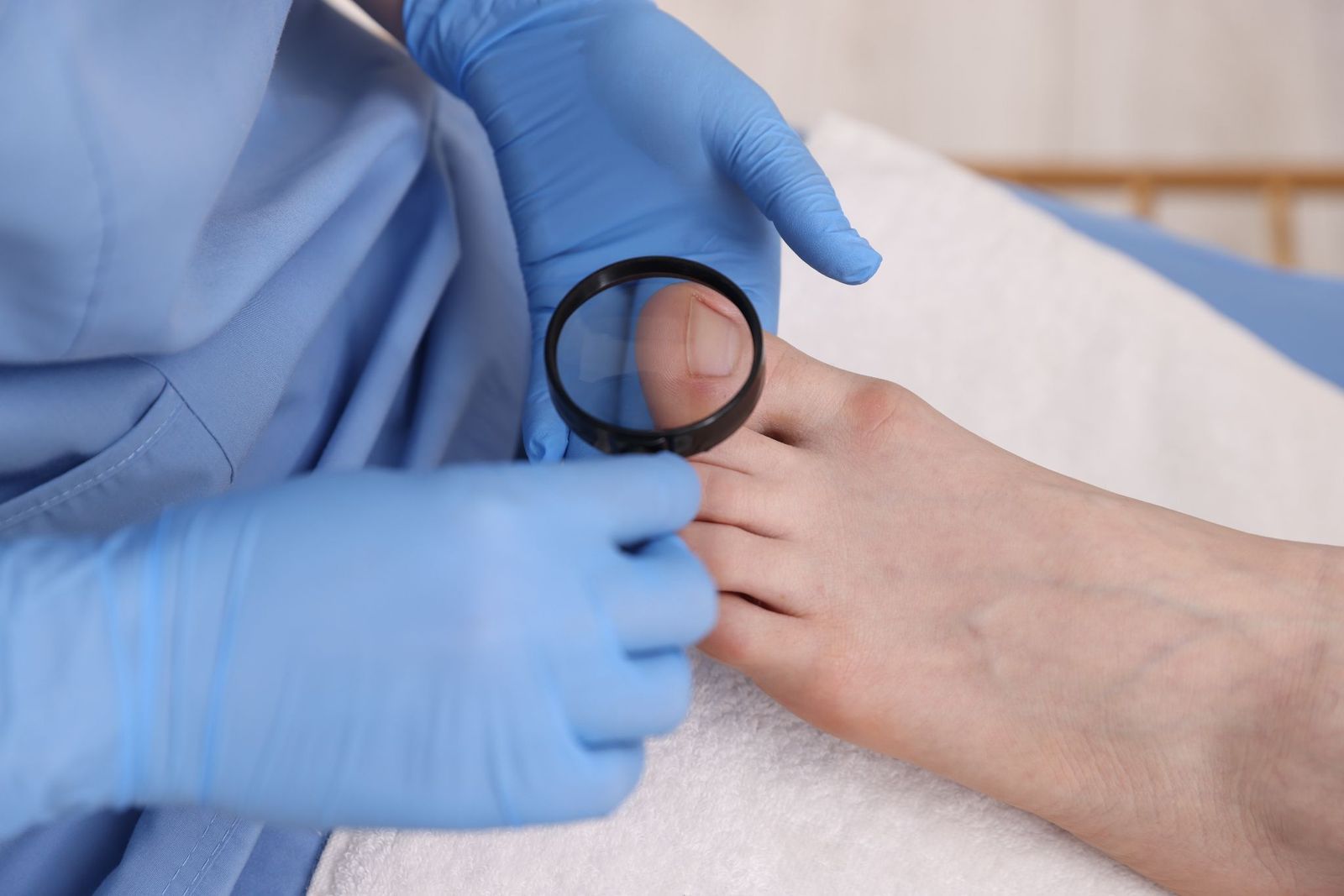
You wouldn’t wish "onychocryptosis" on anyone; not because it’s a serious condition, but because it can be surprisingly painful.
"Onychocryptosis" is the medical term for a classic ingrown toenail; it comes from the Greek words onyx, "nail" or "claw," and kryptos, meaning "hidden" or "concealed." Together, they describe exactly what happens: the edge of the toenail becomes buried beneath the swollen skin alongside it. If you prefer Latin, the same condition is called unguis incarnatus, from unguis, meaning "nail," and incarnatus, meaning "in the flesh." So how does a toenail become ingrown? It happens when the side or corner of the nail grows into the surrounding soft skin, known as the nail fold. The nail edge breaks the skin, prompting the body to react as though it were dealing with a foreign object, causing inflammation, swelling, and sometimes an infection.
Benign

One of the most reassuring words you can see on a medical test result is "benign," although, at first glance, it might sound like something to worry about. In fact, it means almost the opposite.
The word comes from the Latin benignus, formed from bene (meaning "well" or "good") and gignere (meaning "to beget" or "to produce"). Its original sense was "of good origin," "kind," or "favorable." In medicine, it usually means a growth or condition isn’t cancerous, doesn’t invade nearby tissues, or doesn’t spread (metastasize) to other parts of the body. So if you see this word on a test result, it's generally reassuring news, though we should always consult a doctor for an explanation in each specific case.