Tongue slips

What did you just say?! VIP people also have a record of malapropisms!


Published on April 4, 2026


Image: Santa Barbara

We’ve all experienced a moment when a word comes out of a word mouth sounding confident, polished… And completely wrong! Maybe no one noticed, maybe everyone did. Whatever the case, that’s called a malapropism, and they happen when a word sounds close enough to the right one. The result can go from charming to catastrophic, especially if it happens in public. Here are some real-life examples of those verbal stumbles.

1

Electrical votes in Texas

Image: appshunter.io

During a conversation about elections, the then Vice President George Bush was chatting with baseball great Yogi Berra. Berra reportedly mentioned that Texas had plenty of "electrical votes." Can you guess what he meant? The correct words would’ve been "electroral," but the slip was classic Yogi.

2

Fading into Bolivian

Image: Kenny Eliason

After a tough boxing match in 2002, Mike Tyson was asked what came next for him. His answer? He might just "fade into Bolivian." The word he wanted was oblivion, but his version stole the spotlight. Who can blame him? Any of us who make a mistake after receiving a punch or two!

3

The Sixteenth Chapel

Image: Lorenzo Turroni

David Letterman once teased Justin Bieber by saying that too many tattoos could make him look like the Sistine Chapel. Bieber shot back that he wasn’t aiming for the "Sixteenth Chapel" look. The reply came fast and confident, which made it even funnier. Although Michelangelo, among others, would not agree, right?

4

The master of malaprop

Image: Ben White

Comedian Norm Crosby leaned into malapropisms so hard that it became his signature. He was known as The Master of Malaprop for a reason. One of his lines famously urged listeners to enjoy the "blabbing brook" instead of the babbling one. But in his hands, the wrong word was never an accident: It was the whole joke.

5

Dogberry’s verbal adventures

Image: Taha

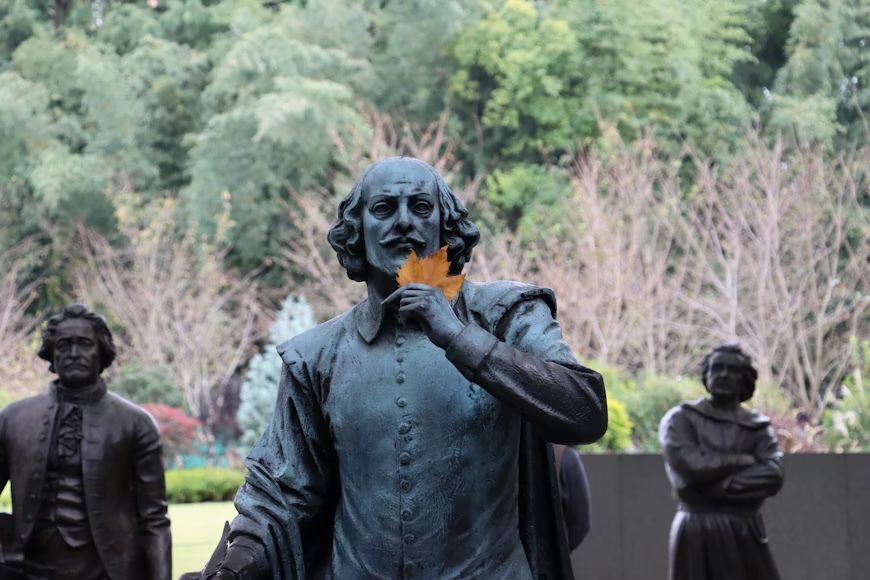
Shakespeare gave us a lot of new words, and some malapropisms too. For example, in Much Ado About Nothing, his character Constable Dogberry was famous for confidently saying the wrong thing. When Dogberry reports that two men were "comprehended" instead of "apprehended," and calls them "auspicious" instead of "suspicious," the comedy writes itself!

6

A coat with installation

Image: Nikolas Noonan

What kind of installation? These malapropism belongs to baseball player Mike Smith, who once praised a new coat by saying it had lots of "installation." He probably just meant "insulation," referring to how warm it was! He meant it as a compliment, besides, he’s a baseball player, what does he know about fashion features!

7

Chicago’s crosswords of the nation

Image: Max Bender

Former Chicago mayor Richard J. Daley had his share of word tangles. He reportedly referred to tandem bicycles as "tantrum" bicycles and called the O’Hare Airport the "crosswords of the nation." The intent was clear, even if the delivery wandered.

8

An unparalyzed moment

Image: Fine Photographics

Gib Lewis, who served as Texas Speaker of the House, once described something as "unparalyzed in the state’s history." The word he wanted was unparalleled, as you can imagine. Still, the statement landed with confidence, which is often half the battle. Moreover, it’s a good thing that whatever he was talking about wasn’t paralyzed, right?

9

Putrified with astonishment

Image: Preston A Larimer

Literature is full of malapropisms, and Mark Twain hasn’t got his record completely clean. In The Adventures of Huckleberry Finn, he gave Aunt Sally a memorable twist. She says she was "putrified with astonishment," and even if we know he meant "petrified," the picture it paints is clear and brilliant. Twain was fully conscious that these humorous words only contributed to the character’s development.

10

Archie Bunker’s verbal gymnastics

Image: Ming De Dong Huang

Archie Bunker from All in the Family was a gold mine for malapropisms. He once asked if he looked like an "inferior decorator" and wrapped things up by saying "Molotov" instead of Mazel tov. His mangled phrases were part of what made the character feel real, stubborn, and unintentionally funny. Did you like him?


Glitches in science

Forget conspiracy theories—these 10 weird facts are real and unexplained


Published on April 4, 2026


Image: Artur Voznenko

Despite centuries of scientific progress, the universe can still throw us some curveballs that seem to defy all logic and understanding. From bizarre sounds deep in the ocean to strange behavior of stellar objects, these unexplained phenomena continue to stump researchers. Here's a breakdown of 10 strange, real-world mysteries that seem like glitches in reality—and so far remain unsolved.

1

ʻOumuamua’s acceleration

Image: NASA Hubble Space Telescope

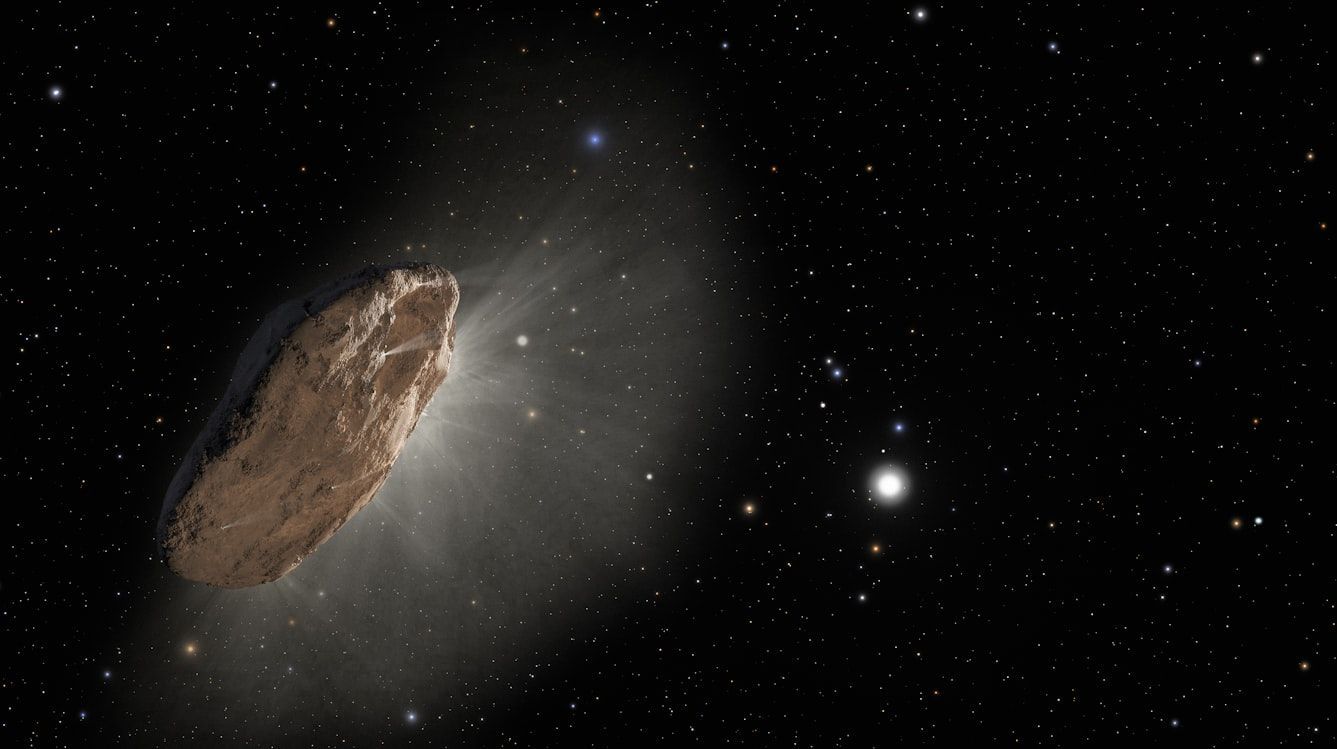
Discovered in 2017, ‘Oumuamua had an unusual shape and trajectory. As it exited the Sun’s influence, it accelerated slightly—an unexpected behavior that left many scientists puzzled.

Some proposed it was an alien probe or, more likely, that outgassing caused the motion, but no definitive explanation fits all the observed data. For now, the mystery of ʻOumuamua remains unsolved.

2

The weirdest form of lightning

Image: Hunter So

Ball lightning has been reported for centuries, often lasting longer than normal lightning and moving erratically indoors or out. Witnesses describe orbs ranging from pea-sized to several feet in diameter.

Even now, there is rare photographic evidence, and the phenomenon has defied controlled reproduction. A 2014 study in China captured spectral data, but scientists still can't agree on how or why it forms.

3

A signal from space

Image: Raychel Sanner

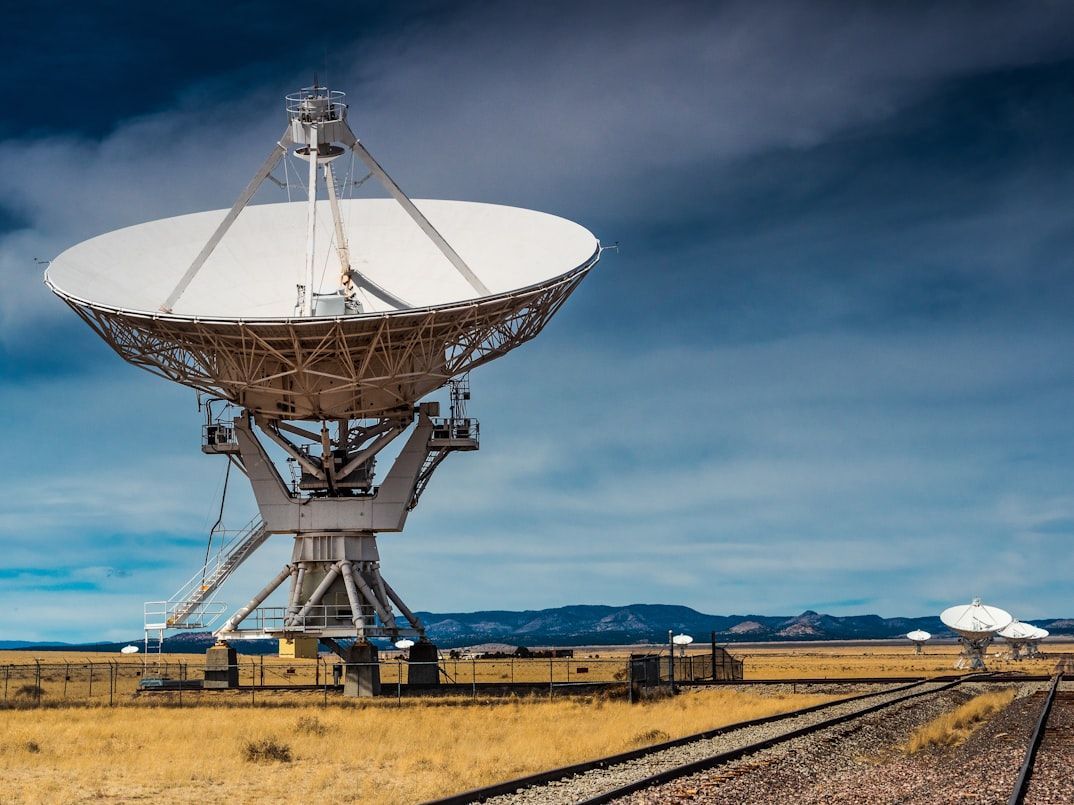
The 72-second radio burst, detected by Ohio State’s Big Ear radio telescope in 1977, was so unusual that astronomer Jerry Ehman circled it and wrote "Wow!" in the margin.

No known natural or terrestrial source matched its signature. Despite repeated searches in the same spot, the signal has never been heard again.

4

The Bloop from the deep

Image: Bradley Singleton

Captured in 1997 by underwater sensors thousands of kilometers apart, the "Bloop" was an ultra-low-frequency sound louder than any known sea creature. It matched no whale or geological activity profile.

NOAA later suggested icequakes as a possible source, but the exact characteristics didn’t match typical ice calving.

5

Earthquake lights

Image: Michael Krahn

Observed in areas like Japan and Italy, these luminous events precede seismic activity by seconds or minutes. They range from white-blue glows to flame-like columns.

No single mechanism explains them. Theories involve piezoelectric effects in rocks, but reproducible lab evidence is sparse and inconsistent.

6

Memory transfer

Image: Denise Jans

Strangely, some organ recipients report new preferences and even memories post-surgery. These aren’t rare coincidences—dozens of documented cases involve patients suddenly acquiring traits of their donors.

A woman who received a heart from a biker craved beer and fast food, which she never had before. A form of cellular memory or nervous system signaling beyond current knowledge has been proposed as a possible explanation, but too little is still known about the phenomenon.

7

The Mpemba effect

Image: aly

Apparently, hot water can sometimes freeze faster than cold water. Observed since Aristotle and confirmed in many experiments, this phenomenon—known as the Mpemba effect—defies our current understanding of thermodynamics.

While evaporation and convection may play a role, they don’t explain all scenarios. No consistent model accurately predicts when the effect will occur, despite decades of research.

8

Is dark energy real?

Image: Ryan Hutton

An invisible force is accelerating the universe’s expansion—and we still barely understand it. First inferred from supernova data in 1998, dark energy appears to make up about 68% of the universe’s mass-energy content.

Yet no direct measurement or particle-based theory explains its nature. It’s known only through its large-scale gravitational effects.

9

Tabby’s Star

Image: NASA Hubble Space Telescope

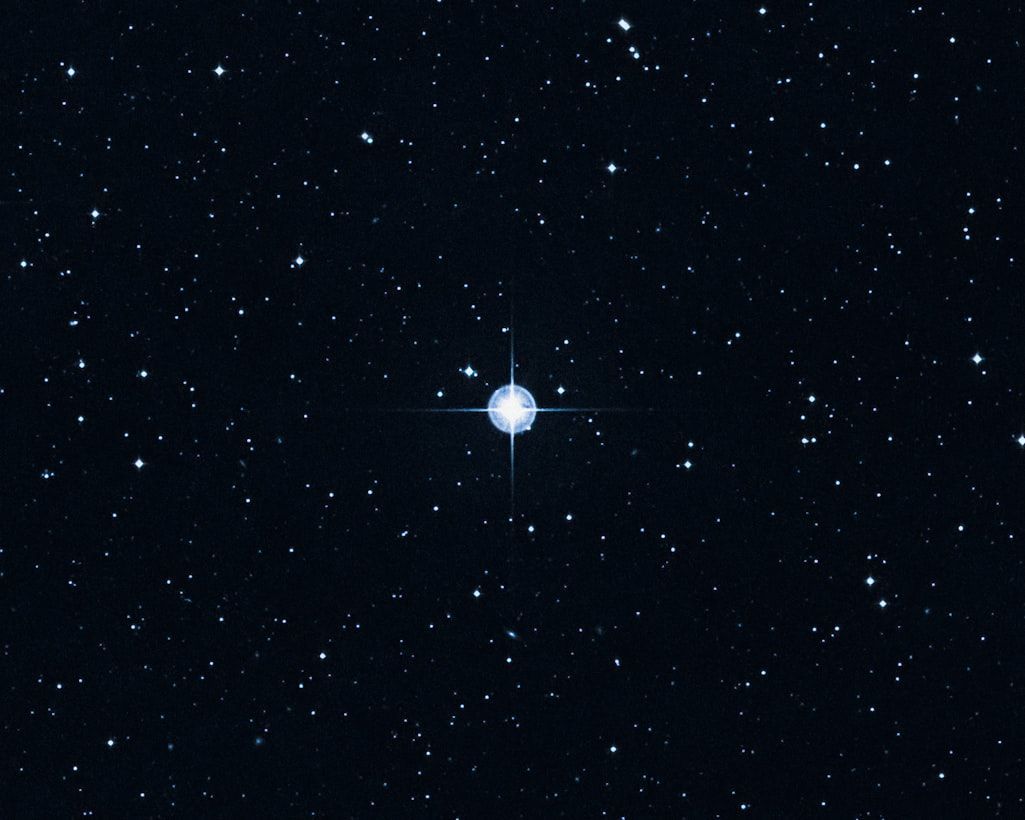
Also known as KIC 8462852, Tabby’s Star is a binary star system in the constellation Cygnus, approximately 1,470 light-years from Earth. The star dims erratically—yet in ways that don’t match common explanations like planetary transits.

Its strange behavior has led some astronomers to speculate about exotic causes, including an alien megastructure. However, current data largely rules out that possibility.

10

The Antarctic gravity hole

Image: Dylan Shaw

Weird as it sounds, a region in East Antarctica has less gravity than expected. While gravity varies slightly across the Earth, the cause of this particular anomaly remains unknown.

Known as the Wilkes Land Mass Anomaly, it covers an area approximately 200 miles wide and causes a noticeable local drop in gravity. First detected via satellite data, it may be the remnant of a massive asteroid impact—or maybe even something deeper.

Looking for an extra scoop of literary fun?

Learn more with our Word of the day

nascent

/ˈneɪs(ə)nt/