Name dropping
These everyday words were once somebody's name
Published on October 8, 2026
We use these words all the time without giving much thought to where they came from. But some of the most ordinary words in the English language have surprisingly personal origins. They were inspired by inventors, politicians, scientists, soldiers, and even a rancher whose cattle had a habit of wandering around unbranded. Here are 10 familiar words that started with the names of real people.
Sandwich: John Montagu, Earl of Sandwich

The story of the sandwich takes us back to 18th-century south-east England and John Montagu, the 4th Earl of Sandwich. According to the popular story, Montagu was a devoted card player who wanted something he could eat without leaving the gaming table. He reportedly ordered meat placed between slices of bread so he could continue playing without a knife and fork. The word sandwich was already being used by 1762, and the association with Montagu became firmly established soon afterward.
Montagu probably didn’t invent the basic idea of putting food between bread. What he did have was a connection to the fashionable London world where the name caught on. By the late 18th century, sandwich was appearing in cookbooks and everyday writing, turning an aristocrat's name into one of the most familiar foods in America and beyond.
Boycott: Charles Boycott

Few people's names have become a verb as quickly as Charles Boycott's. In 1880, Boycott was an English land agent working for the Earl of Erne in County Mayo, Ireland. During a dispute over rents, local tenant farmers refused to work for him or do business with him after he attempted to evict leaseholders. The campaign of social and economic isolation became known as a boycott, using his own surname to describe the tactic.
The word spread remarkably fast. Newspapers began using boycott in 1880, and it soon became an English verb meaning to refuse to deal with someone or something as a form of protest. Before long, the name had traveled well beyond Ireland and entered other languages, too.
Braille: Louis Braille
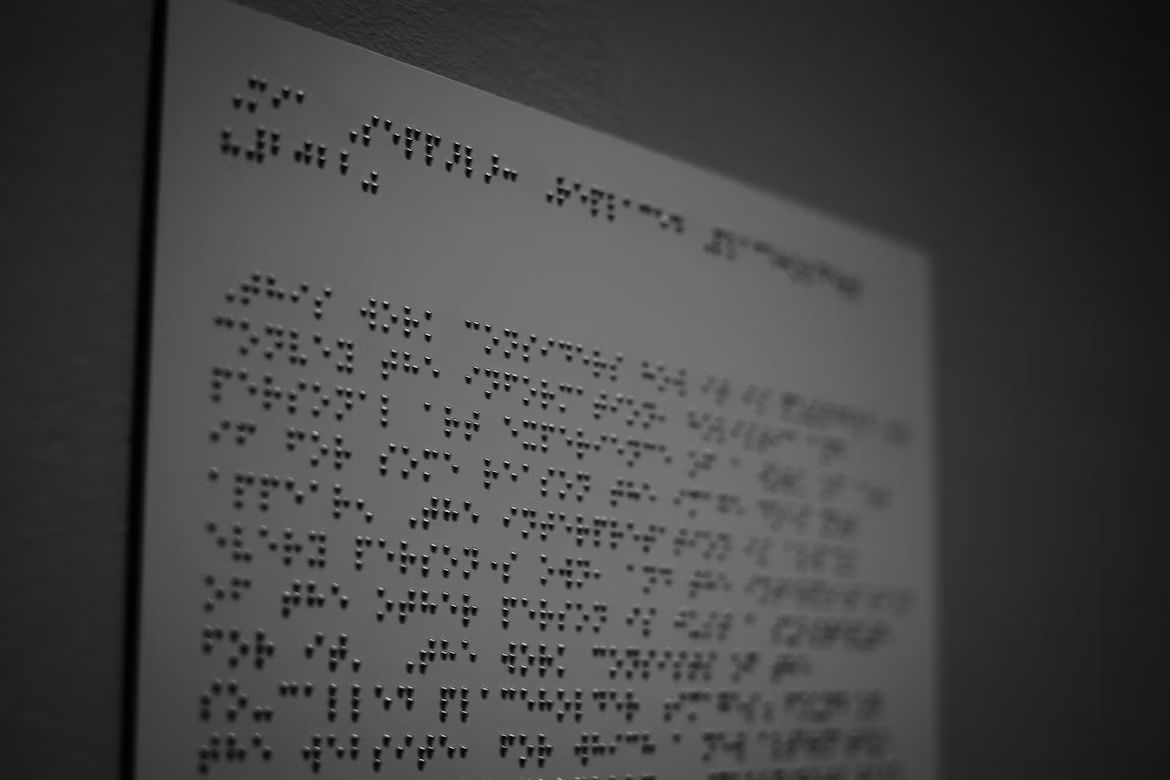
Louis Braille was just 15 years old when he developed the basic system that would eventually bear his name. Blind since childhood, Braille was a student at the Royal Institute for Blind Youth in Paris. In 1821, he encountered a raised-dot military code created by French army officer Charles Barbier. Braille adapted and simplified the idea, creating a much more practical six-dot system by 1824.
He published his method in Paris in 1829, explaining how raised dots could be used for words, music, and other forms of writing. The system was eventually adopted around the world, and braille became the everyday name for both the writing system and the raised-dot characters people read by touch.
Diesel: Rudolf Diesel

The next time you see the word diesel at a gas station, you're looking at the surname of a real inventor. German engineer Rudolf Diesel spent the 1890s developing a new kind of internal-combustion engine designed to be more efficient than existing engines. He filed a patent for his engine in 1892, and his first experimental engine successfully ran under its own power in 1893.
The engine soon became known simply as the Diesel engine, and by 1894 the term was being used to refer to the engine type. Eventually, diesel came to describe not only the engine but also the fuel used to power it. Rudolf Diesel's last name had become a word for an entire category of everyday technology.
Maverick: Samuel Maverick

Today, calling someone a maverick usually means they are independent or unconventional. But the word originally had a much more literal connection to the American West. Samuel Augustus Maverick was a 19th-century Texas rancher and cattle owner known for leaving some of his cattle unbranded. By the 1860s, an unbranded calf or yearling found wandering the range could be called a maverick.
Over time, the word took on a new meaning. By the late 19th century, a maverick could also mean a person who went their own way and didn't always follow the crowd. The word had gone from describing a wandering, unbranded calf to describing someone who liked doing things differently.
Guillotine: Joseph-Ignace Guillotin

The name guillotine is one of the more misleading entries on this list because Joseph-Ignace Guillotin did not actually invent the machine. During the French Revolution, Guillotin was a physician and member of the National Assembly who argued that executions should be carried out by a quick, standardized method rather than the often-botched ways of hanging or beheading by sword.
A machine was subsequently designed by French doctor Antoine Louis and built by Tobias Schmidt. It was tested in Paris in 1792, and the device soon became known by the name of the man who had advocated its use. The guillotine went on to become one of the most recognizable symbols of the French Revolution, even though its namesake never wanted his name attached to it.
Cardigan: James Brudenell, Earl of Cardigan

That comfortable knitted sweater has a surprisingly military history. The word cardigan comes from James Thomas Brudenell, the 7th Earl of Cardigan, a British Army officer who became famous during the Crimean War (1853–1856), a conflict in which Britain, France and their allies fought Russia. Cardigan is especially remembered for leading the Charge of the Light Brigade at the Battle of Balaclava in 1854, a famous but disastrous cavalry attack in which hundreds of British soldiers rode into heavy Russian fire.
According to the traditional story, Cardigan wore a knitted wool jacket during the campaign, helping make the style associated with him. The garment was later known as a cardigan, with the word first recorded in English in 1868. Interestingly, the place name itself, Cardigan in Wales, comes from the Welsh Ceredigion, meaning "Ceredig's land."
Watt: James Watt

You don't have to be an engineer to use a watt. The word appears on light bulbs, appliances, and electrical equipment, but it honors Scottish engineer and inventor James Watt. His improvements to the steam engine in the 18th century helped make steam power far more practical and influential during the Industrial Revolution.
The name was proposed for a unit of power in 1882 by British scientist William Siemens, who suggested honoring Watt's contributions. The unit was formally adopted in the international scientific system in the following years and eventually became part of the modern SI system. Today, a watt simply measures the rate at which energy is transferred, but its name remembers a man who transformed steam power forever.
Pasteurization: Louis Pasteur
Milk may be the first thing that comes to mind when you hear pasteurization, but Louis Pasteur originally developed the process for a very different reason. In the 1860s, the French chemist was investigating why wine was spoiling. His experiments showed that gently heating the liquid could kill many of the microorganisms responsible without ruining the wine.
The verb pasteurize appeared in English by 1881, while pasteurization followed a few years later. It was eventually applied widely to milk and other foods, turning Pasteur's surname into a word familiar to anyone who has ever read a food label.
Nicotine: Jean Nicot

The word nicotine traces back to Jean Nicot, a 16th-century French diplomat. While serving as France's ambassador to Portugal, Nicot encountered tobacco and sent tobacco seeds and powdered leaves from Lisbon to France in 1561. The plant eventually became known by the botanical name Nicotiana, honoring him.
More than two centuries later, the chemical compound found in tobacco was given the name nicotine. The word appeared in French in the early 19th century and entered English in 1819. So although Nicot lived in the 1500s, his surname ultimately became attached to one of the most recognizable chemical names in everyday life.


