Not so happy originally

The tragic ending of Cinderella's stepsisters that Disney changed


Published on June 9, 2026

Image: Natalia Y.

Disney movies have adapted several beloved fairy tales and stories, which means that, for those who experienced these stories as movies for the first time, coming across the original tales can be shocking, as they are quite different, and sometimes even scary and gory.

Most of Disney's movies are intended for children, so these stories had to be adapted and often softened for the audience. Let’s see how Disney changed famous stories when making them into movies.

1

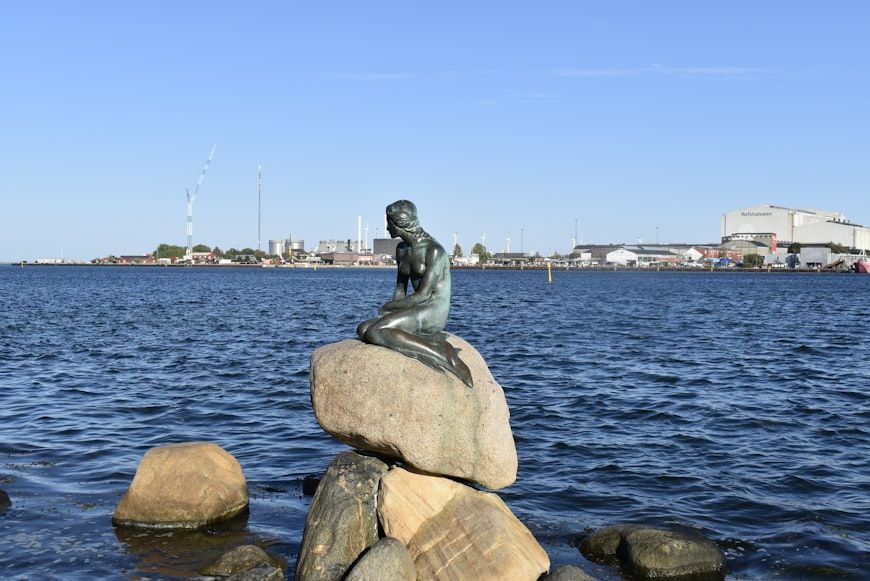
The Little Mermaid

Image: Anjali Shrivastava

This 1837 story by Hans Christian Andersen is, at first sight, similar to its movie adaptation. Yes, in the original, the Little Mermaid feels sharp pains each time she walks, but other elements remain. However, the main difference is in the ending: before the prince’s wedding, the sea witch tasks the Little Mermaid with killing the prince in order to live, but she prefers to die herself and turn into sea foam.

2

Cinderella

Image: The Now Time

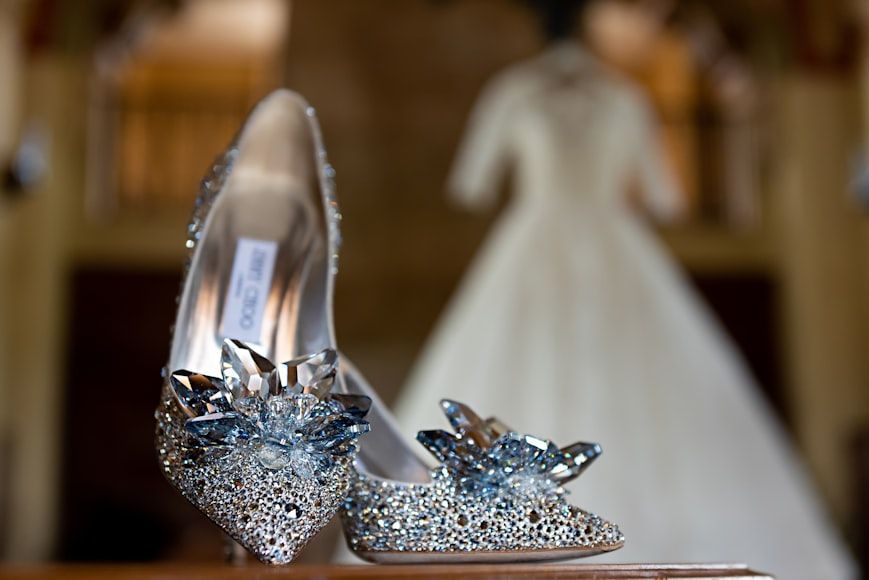
The 1950 version of Cinderella also follows most of the original story. Most of the differences with the Brothers Grimm’s version come from elements added by Disney, such as the Fairy Godmother and the singing mice. But there is one gory element that needed to be changed before making a children’s movie: in the tale, Cinderella’s stepsisters, trying to fit into the crystal slipper, resort to cutting parts of their feet.

3

Snow White

Image: Priscilla Du Preez 🇨🇦

The first full-length Disney animated movie, Snow White and the Seven Dwarves was a resounding success. However, the story has some differences when compared to the original story by the Brothers Grimm. When the Queen gives Snow white the poisoned apple, it is not a true love’s kiss that wakes her. The prince sees her lying in her crystal coffin and wants to take her with him. When he moves the coffin, the piece of apple that’s still in her throat moves, and she wakes up. As punishment, the Queen is made to dance in shoes made from hot iron until she falls dead.

4

The hunchback of Notre Dame

Image: Marcel Strauß

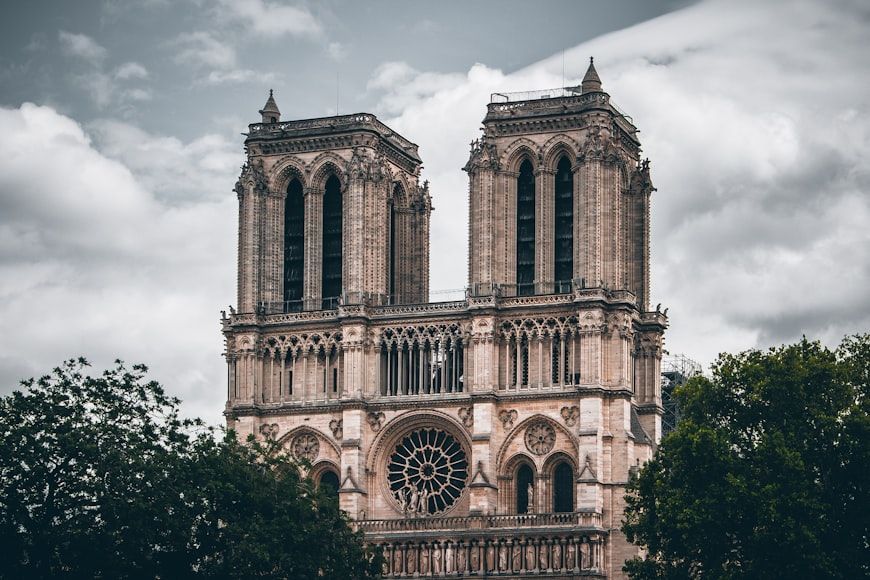
When watching this lovely musical, it is difficult to imagine that it comes from a lengthy novel filled with tales of vengeance, obsession, social disparities, and a tragic ending. In Notre-Dame de Paris by Victor Hugo, Quasimodo is deaf and nearly mute, and he is isolated from the world. Frollo, an archdeacon inamoured by the young Esmeralda, accuses her of witchcraft and ultimately succeeds in killing her, while Frollo, instead of the chivalrous young man portrayed by Disney, takes advantage of Esmeralda but abandons her in her time of need.

5

Tangled

Image: Taylor Smith

A reimagination of the 19th-century Rapunzel by the Brothers Grimm, the Disney version adds many elements to the story, such as the magical properties of the hair or Rapunzel being a stolen princess. In the original, Rapunzel’s parents give her away as payment for a stolen lettuce. When a prince comes across her tower, they fall in love, but they are tricked by the witch, with the prince falling into a thorny bush and hurting his eyes. Luckily, there is a happy ending where they are reunited, and Rapunzel’s tears restore the prince’s sight.

6

The princess and the frog

Image: Adam Currie

This 2009 version, set in New Orleans, is only loosely based on several classic tales featuring a prince-turned-frog. While in the Disney version, the kiss turns Tiana into a frog, in the classic fairy tale, the princess, disgusted by the idea of kissing the frog prince, throws him violently against the wall. Luckily for him, it works just as well as a kiss, and he returns to his original form.

7

Beauty and the Beast

Image: jerry klein

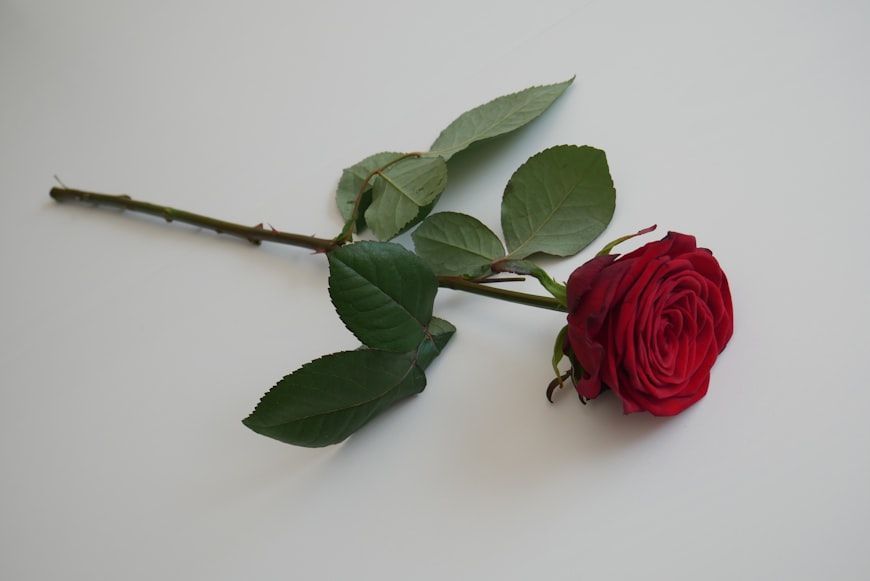
The main fairytale behind this Disney classic is of French origin. In it, the reason for Belle’s arrival at the castle is quite different: her father steals a rose from the Beast’s garden and is imprisoned. Belle’s sisters blame her for their father’s misfortunes and demand that she stay in his place. She goes to the castle, filled with invisible servants, where the Beast tries to make her fall in love with him. After being allowed to visit her family, she returns to find the Beast dying. After professing her love, the Beast turns into a prince, and they live happily ever after.

8

Frozen

Image: Carmen Keuper

Loosely based on Hans Christian Andersen’s The Snow Queen, Disney’s Frozen turns a dark story featuring a villainous Queen into a tale of sisterly love. In the original story, Gerda (the inspiration behind the character of Anna) goes on a quest to rescue her friend Kai from the clutches of the evil Snow Queen. Ultimately, her tears are able to melt the ice shards in Kai’s heart and save him.

9

Pinocchio

Image: Rhamely

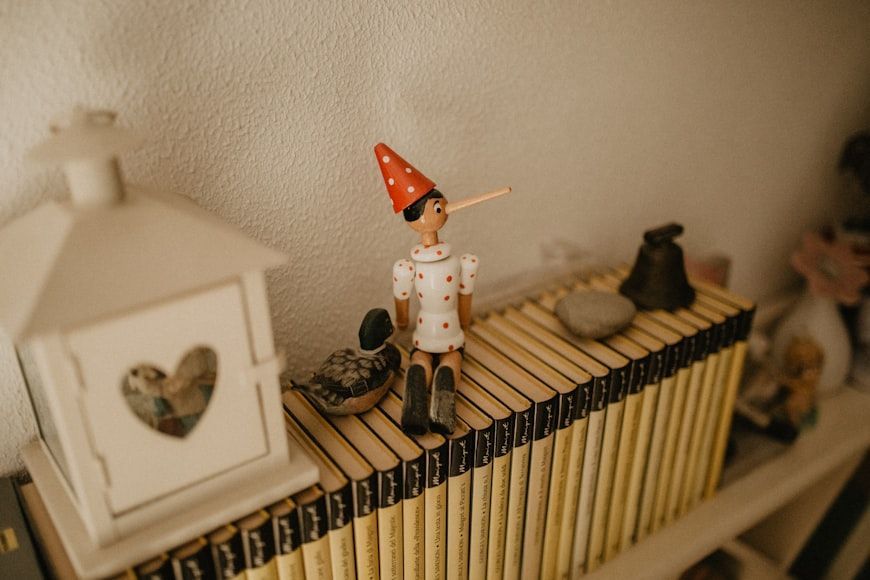
Inspired by the 1883 Italian novel The Adventures of Pinocchio by Carlo Collodi, the Disney movie gives us a much more tame version of the story. In the original, Pinocchio is rude and cruel. Often chastised by Jiminy Cricket, he ends up killing him and is punished in consequence. A moral tale about disobedience and laziness, the original Pinocchio is only able to turn into a human boy after working hard and learning to care for others.

10

Hercules

Image: Simone Pellegrini

As with most mythological stories, the original tale of Hercules is quite tragic, and not the happy ending story presented by Disney. A product of the affair of Zeus with a mortal woman, Hercules is hated by Hera, Zeus’ wife, who drives him mad. While out of his mind, he murders his wife, Megara, and their children. To atone for this crime, he performs 12 seemingly impossible labours. In the end, Hercules dies after being poisoned, but he is eventually turned into a god by Zeus.


Adjective Stravaganza

Expand Your Lexicon With These Breathtaking Qualifiers


Published on June 9, 2026


Image: Sincerely Media

The English language is vibrant and generous when it comes to describing things. Its adjectives can be precise, poetic, naive, gentle, nasty, humorous, and so much more. Yet, for whatever reason, speakers show a tendency to boil down their lexicon into a very narrow choice of words.

We have assembled a short list of common adjectives and some of the words that can be used to replace them. Depending on the situation, some will be more suitable than others, but all of them will serve to expand your vocabulary in interesting ways!

1

Nice

Image: Andrew Schultz

One of the most overused adjectives in the English language is "nice". We use it for everything: Maybe you had a nice conversation, you live in a nice neighborhood, or you have a nice puppy.

Of course, a puppy can be nice. But it could also be charming, cute, precious, or even adorable. Your neighborhood could be pretty or lovely. Your conversation, captivating or absorbing. You get the idea.

2

Beautiful

Image: Jason Blackeye

A sunset is beautiful, yes. But a sunset can also very well be golden, gorgeous, spectacular, dramatic, red, magnificent, glowing, burning, dazzling, wonderful, fiery, even breathtaking or glorious. An event so exquisite deserves more than the ubiquitous "beautiful," don't you think?

3

Good

Image: Drew Coffman

A very useful little word to describe things that are on the positive side of things, but not much further down the line. Not great, but definitely not bad.

Many things in life are, simply put, just good: A decent cup of coffee, a satisfactory day at work, an adequate microwave meal. These are all things that, if done right, are just good, and that's why we tend to over-utilize this humble adjective. However, many words could serve to replace it. Some we've just used here, but you can certainly think of some more.

4

Expensive

Image: Alexander Mils

The word "expensive" is thrown around quite a lot, and has been for a while. For this very reason, the English language has more than a few synonyms worth its salt to express the same concept.

A pricey item can also be described as exorbitant, extravagant, fancy, lavish, upscale, posh, or steep. Contrary to what they describe, using any of these adjectives is 100% free.

5

Big

Image: April Pethybridge

Another omnipresent descriptor that deserves a rest. And for good reason: the world is, in fact, a big place with plenty of big things worthy of conversation.

However, besides big, things can be called plenty of other things: huge, enormous, substantial, immense, gigantic, spacious, monumental, or even gargantuan if you are looking for the ultimate in matters of size.

6

Small

Image: Daniel K Cheung

When talking about scale, it's all about nuance. Almost as ubiquitous as its big brother, "small" is another versatile word that, despite its usefulness, loses meaning without context.

Think of words like little, tiny, minuscule, compact, diminutive, microscopic, undersized, and minute. Every one of them offers some nuance and variation, while still expressing the core idea of smallness.

7

Difficult

Image: Michal Parzuchowski

A great many things in life are difficult and there is no shame in admitting to it. What is a shame is using the same word over and over again when we have such a rich vocabulary to express every nuance of the human experience.

Things can be difficult, but also challenging, demanding, complex, arduous, complicated, tricky, formidable, onerous, laborious, tough, or just hard.

8

Easy

Image: Pablo Arroyo

As many things in life are difficult, many others are outright easy. Whenever you find a straightforward solution to a problem, life gets a little simpler. Other words in the "easy" ballpark are uncomplicated, painless, smooth, undemanding, and breezy. You should try to incorporate them into your lexicon—it's effortless.

9

Hot

Image: Etienne Girardet

One of those words that can be used to convey many different meanings, "hot" signifies high temperature, but it is also used to express urgency, high demand, beauty, and intensity.

Many synonyms can also be used to describe the spectrum of expressions that "hot" is used for. From the intense "sizzling" to the extreme "scorching" or "boiling", to "blistering" or even "burning", all these are waiting on the sidelines to replace the overused "hot."

10

Cold

Image: Spencer Backman

Another much-used adjective, the direct opposite of the one just mentioned, is "cold". Many things can be cold, from drinks to relationships to places to food and quite a few more. Yet, the word has a few relatives that are seldom used.

"Chilly" suggests a mild and discomforting cold, "frigid" conveys an intense cold, "icy" emphasizes the presence of ice, and "frosty" describes a coldness that is frost-covered. Also, "biting" implies a sharp wind, "freezing" means a temperature at freezing point, and "numb" conveys a lack of sensation.

11

Late

Image: insung yoon

In a world of constant rush, running late is inevitable. The term itself signifies a point in time occurring after the expected hour. "You're late" is a much-heard phrase, usually uttered in mild anger.

But for such an ungrateful term, there are plenty of related terms at our disposal: tardy, delayed, belated, behind schedule, overdue, running behind, or behind time can all be used to replace the usual "late".

Looking for an extra scoop of literary fun?

Learn more with our Word of the day

seminal

/ˈsɛmən(ə)l/