The etymological twist: 10 common words that used to mean the opposite


Published on August 25, 2026

Image: Snapwire

Language is a moving target. What we consider a precise definition today is often just the latest stop on a centuries-long journey of semantic drift. A 17th-century scholar would likely be horrified by how we use words like sophisticated or anecdote. Etymology is like a fossil record of human behavior, class struggles, and cultural priorities. Here are 10 common words that have undergone radical transformations.

1

Geek

Image: Andrea Piacquadio

Before it was a badge of honor for Silicon Valley billionaires, a geek was a social pariah of the most literal kind. In the early 20th century, the term referred to a specific type of carnival performer, a side show "freak" whose primary act involved biting the heads off live chickens or snakes.

The word likely stems from the Low German geck, meaning "fool" or "simpleton". It wasn’t until the mid-20th century that the meaning drifted toward social awkwardness and, eventually, an obsessive devotion to technical or niche subjects. Today, the geek has moved from the dirt of the carnival floor to the top of the global economy, but the word’s gruesome origins remain a hidden layer of its history.

2

Sophisticated

Image: Vika Glitter

In a modern context, being sophisticated is an aspiration, it implies refinement, worldliness, and complexity. However, for most of its history, the word was pejorative. Derived from the Greek sophistēs (the Sophists, a group of philosophers often accused of using clever but fallacious reasoning), a sophisticated thing was something that had been corrupted or adulterated.

In the 1600s, you might have been accused of "sophisticating" wine by watering down or adding lead to sweeten it. To be sophisticated was to be "unnatural" or "adulterated". It wasn’t until the 19th century that the complexity of being sophisticated began to be viewed through a positive lens, evolving into the mark of high culture we recognize today.

3

Handsome

Image: Alexa Popovich

We currently use the term handsome to describe a person, usually a man, with pleasing, symmetrical features. But the word’s roots are purely functional. In the late 14th century, a handsome object was simply something that was hand-some, meaning "easy to handle" or "handy".

Over time, the utility of an object became associated with its quality. If a tool was handsome, it was well-made and fit for its purpose. This led to the word describing things that were "generous" or "substantial" (for example, a "handsome reward"), and eventually, by the late 16th century, it settled into its current role as a physical descriptor for an attractive person.

4

Anecdote

Image: Engin Akyurt

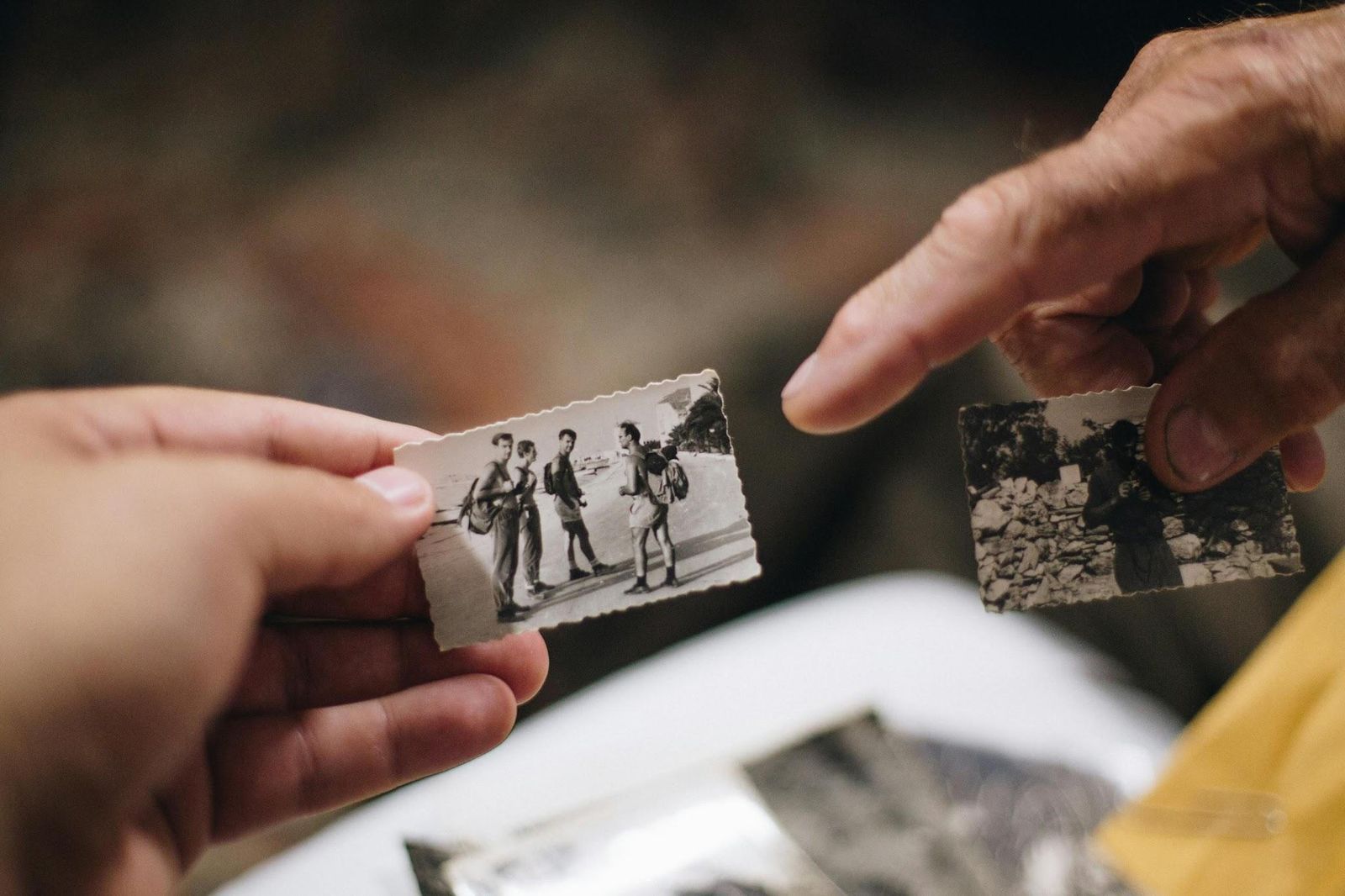
An anecdote is now a brief, often amusing story about a real person or incident. But in its original Greek, anekdota, it literally meant "things unpublished".

The term gained fame through the 6th-century historian Procopius, who wrote a public history of the Emperor Justinian and his court. At the same time, he also wrote a "Secret History" filled with scandalous details that he didn’t dare release while the subjects were still alive. These unpublished secrets were the original anecdotes. The meaning eventually shifted from secrets to short, private narratives, and finally to the casual stories we share at parties today.

5

Brutalize

Image: Alexa Popovich

This word is currently the subject of a massive linguistic tug-of-war. Most people today use brutalize to mean "to treat someone in a brutal or violent way". However, its original 18th-century meaning was the exact opposite: "to become a brute" or "to make someone brutal".

The original logic was that the person committing the violence (or the person exposed to it) was being stripped of their humanity and turned into a beast. If you were brutalized by war, it didn’t mean you were hurt; it meant you had been made a savage by experience. While the modern "attacked violently" definition is now widely accepted, purists still argue that the word should describe the state of one’s character, not just the physical assault.

6

Nostalgia

Image: Ante Majic

We think of nostalgia as a bittersweet, sentimental longing for the past. But in the 17th century, it was a terrifying medical diagnosis. Coined by a Swiss medical student, the term combined the Greek nostos (homecoming) and algos (pain).

It was considered a physical "disease of the imagination" that primarily affected soldiers fighting far from home. Symptoms included persistent melancholy, heart palpitations, and even death. It was treated as a literal sickness, sometimes cured by sending the soldier home, but occasionally met with more gruesome 17th-century medical interventions. Only in the 20th century did it soften into the purely emotional, non-lethal state we discuss today.

7

Backlog

Image: cottonbro studio

In the modern office, a backlog is a source of stress, a pile of unfinished tasks or orders. But in the 1600s, a backlog was a luxury. It was literally the "back log," the largest, thickest piece of wood placed at the back of the fireplace to reflect heat forward and keep the fire burning through the night.

Because it was so large, the backlog was the last thing to burn. Over time, the concept of something "kept in reserve" or "accumulated at the back" moved from the fireplace to the ledger book. By the 1880s, the "unburned" log had become the "unfinished" work.

8

Manipulate

Image: Polina Tankilevitch

To manipulate someone today carries a heavy connotation of deception or unfair control. Yet, the word began as a neutral, even positive, term for manual dexterity. Rooted in the Latin manus (hand), it originally meant "to treat or operate with the hands."

It was a term used by scientists and doctors to describe the skillful handling of tools or physical objects. It wasn't until the mid-19th century that the word jumped from the physical to the psychological, describing the skillful (but often dishonest) handling of people or information for one’s own advantage.

9

Condominium

Image: quang vinh

Long before it was a type of real estate, a condominium was a system of government. Coming from the Latin con- (together) and dominium (right of ownership), it referred to "joint sovereignty" over a territory by two or more states.

For instance, a piece of land ruled by both England and Egypt would be called a condominium. It wasn't until the 1960s that the term was co-opted by the American real estate market to describe a building where individuals own their units but share the common areas—a miniature, domestic version of "joint sovereignty."

10

Scavenger

Image: Denitsa Kireva

Few words have tumbled as far down the social ladder as scavenger. In the Middle Ages, a scavager (from the Old French escauwer, "to inspect") was a respected customs official. Their job was to inspect imported goods and collect "scavage," a tax on foreign merchants.

As part of their duties, these officials often had to oversee the cleaning of the streets where the merchants set up shop. Eventually, the name for the official (scavager) was applied to the laborers who actually did the cleaning. From there, it became a general term for anyone who picked through trash, and finally, it was adopted by biology to describe animals that feed on carrion.


Surprise!

Did you know these 10 exhilarating twist endings?


Published on August 25, 2026


Image: krakenimages

Who doesn’t love a good ending? Those final moments of entertainment are definitely the turning point that elevates some books and films to masterpiece status. And it should be said—sticking the landing is no easy task. Endings are where all loose ends of a story come together, and it takes a dedicated artist to truly bring their work of art to a perfect close.

With that in mind, we believe a special mention is due to those pieces of media that go even further and completely defy our expectations with their endings. Yes, we’re talking about those unforgettable twists in movies and books that shook us to our core and made us reconsider the entire experience.

Without further ado, here are 10 of the best twist endings out there. Don’t worry—this list is entirely spoiler-free. Enjoy!

1

Psycho

Image: Maxime Roedel

We’ll start with an American classic. In 1960, while Alfred Hitchcock was filming what many consider his ultimate masterpiece, he instructed his production crew to visit bookstores across Los Angeles and buy every available copy of Robert Bloch’s 1959 novel Psycho. His reason? He wanted to prevent future viewers from spoiling the movie’s twist ending.

While there’s no way to know whether Hitchcock’s strategy was successful, Psycho’s shocking conclusion took the world by storm. Its masterful final reveal instantly cemented the film as a classic, securing its place as one of the greatest movies in cinematic history.

2

Citizen Kane

Image: Auke Bakker

Speaking of absolute classics, let’s move on to a film that completely revolutionized the industry. Orson Welles’ Citizen Kane is still considered one of the greatest movies of all time, and many arguments support this claim—from its brilliant script to its groundbreaking technical achievements.

A key element that makes this film so remarkable is the mystery surrounding the word Rosebud—the single word Charles Kane repeats throughout the movie. As promised, we won’t spoil it in case you haven’t seen it, but let’s just say the reveal is just as revolutionary as the film itself.

3

The Turn of the Screw / The Others

Image: Carlos de Miguel

Henry James’ novella The Turn of the Screw radically changed the ghost story genre. Written in 1898, it follows a governess who moves with two children to a remote country house. After a series of inexplicable occurrences, they become convinced the house is haunted.

What makes this seemingly simple story so remarkable is the way the ending completely turns the story upside down. The Turn of the Screw has been adapted multiple times for the big screen and has influenced other iconic films, such as the 2001 movie The Others, starring Nicole Kidman.

4

Fight Club

Image: Danny Greenberg

Chuck Palahniuk's 1996 novel Fight Club is best known for its 1999 film adaptation, starring Edward Norton and Brad Pitt. With a title like Fight Club, you might expect an adrenaline-fueled action flick, but the film is far more than that. It’s a deep exploration of human nature and the dangers of modern society, culminating in a jaw-dropping twist ending.

A big part of what makes this movie so compelling is the performances by Pitt and Norton. They play seemingly opposite characters who unexpectedly find in each other the perfect counterpart to their personalities. Without revealing the ending, the film’s climax offers a striking portrayal of what happens when we confront the most destructive aspects of our personalities.

5

The Sixth Sense

Image: Steinar Engeland

M. Night Shyamalan is a truly divisive director—some consider him a genius, while others find his movies contrived and difficult to follow. Regardless, most viewers agree that his 1999 film The Sixth Sense, which was nominated for six Academy Awards, is the pinnacle of his filmography.

The movie follows a child psychologist (played by Bruce Willis) who finds himself at a crossroads with a young patient named Cole, a boy cursed with the ability to see ghosts. Most of us remember its jaw-dropping ending (don’t worry, we won’t spoil it), which forever changes the way audiences experience the film on repeat viewings.

6

Shutter Island

Image: Jon Butterworth

Martin Scorsese’s 2010 thriller Shutter Island took an already unsettling location—a hospital for the criminally insane—and made it even more terrifying. Starring Leonardo DiCaprio and Mark Ruffalo, the film follows U.S. Marshal Teddy Daniels as he investigates a disappearance on the remote Shutter Island.

Based on the 2003 novel of the same name, Shutter Island is most remarkable for how its twist ending is meticulously built throughout the film. While undeniably surprising, the movie masterfully plants small clues and hints that, in retrospect, help it make sense.

7

Chinatown

Image: Wes Hicks

The private investigator genre is one of the cornerstones of modern mystery and thriller films. In that sense, the 1974 neo-noir mystery Chinatown feels like a love letter to the iconic films that helped build this genre.

The film follows Jake Gittes (played by Jack Nicholson), a detective initially assigned a seemingly simple case. However, what begins as a routine job soon unravels into a vast web of conspiracies, culminating in Gittes uncovering the shocking truth at the heart of it all.

8

Star Wars: The Empire Strikes Back

Image: André Volkmann

We can probably skip the spoiler warning for this one—there’s hardly a living soul who can’t quote this movie’s most famous line. Still, we promised you a completely spoiler-free article, so we’ll stick to our guns and keep the twist under wraps.

The Empire Strikes Back is perhaps the most perfect example of a modern twist ending. Everything about this reveal is unforgettable: James Earl Jones’ commanding delivery, the shot of Darth Vader’s unyielding expression, and Mark Hamill’s raw, emotional performance. Honestly, can you think of a more quotable line of dialogue in movie history?

9

The Prestige

Image: Arnór Ingi Júlíusson

Who knew that feuding magicians could make for such a compelling story? Starring Hugh Jackman and Christian Bale, the 2006 film The Prestige, based on the 1995 novel of the same name, follows the intense rivalry between two 19th-century magicians and the extreme lengths they go to upstage each other.

Not only does The Prestige weave a gripping narrative, but it also immerses viewers in the fascinating world of Victorian-era magic shows. On top of that, director Christopher Nolan delivers a jaw-dropping twist ending that left audiences flabbergasted.

10

The Usual Suspects

Image: cottonbro studio

Let’s wrap up this article with one of the most literal examples of a twist ending. The 1995 film The Usual Suspects follows a group of robbers who become the focus of a police investigation. The entire story unfolds through the interrogation of a small-time criminal named Verbal Kint, who is being questioned about his connection to a mysterious and elusive figure known as Keyser Söze.

One of the film’s greatest strengths is its ability to keep the audience guessing about Keyser Söze’s true identity. It isn’t until the very last scene that The Usual Suspects finally reveals the real identity of this criminal mastermind. A secret that we’ll, of course, keep to ourselves.

Looking for an extra scoop of literary fun?

Learn more with our Word of the day

predominant

/priˈdɑmən(ə)nt/