Nothing is set in stone

The Oxford comma is a choice, not a rule (and it is not about grammar)


Published on June 16, 2026

Image: Markus Winkler

Unlike languages like French or Spanish, the English language does not have an official academy that registers the use of the language and determines which rules still apply and which are obsolete. While institutions such as the Oxford Dictionary help with standardizing and registering the language, English evolves through the daily use of its speakers, and its rules evolve with it.

As a consequence, some rules are more fixed than others, and many of them are not so much rules as they are stylistic choices. Does this mean we can write however we please? Not exactly, but it means that many "rules" are not set in stone. Let’s see some language mandates that are more of a guideline.

1

Sentences should never end in a preposition
Image: Austin Chan

As evidenced by daily language, it is perfectly acceptable to end a sentence with a preposition, no matter the context or the formality. In fact, it’s something that speakers tend to do naturally. The idea that ending sentences with a preposition is incorrect is a myth left over by 17th-century grammarians trying to impose Latin grammar on the English language.

2

You should never split an infinitive

Image: Megan Watson

‘To run quietly’ or ‘To quietly run’, which one is correct? The answer is both. The choice to place an adverb after the infinitive or in the middle of it has nothing to do with proper grammar, but with emphasis and sounding more natural. Again, this "rule" is a leftover from Latin grammar.

3

You should always use ‘whom’ when referring to the object

Image: Artem Beliaikin

Not so long ago, this rule was set in stone, and saying "to who?" instead of "to whom" would get you a few stares. However, rules change as people change, and the use of ‘who’ to refer to the object has become increasingly more common. However, this only applies to informal contexts. In a more formal setting, it is recommended to still use ‘whom’.

4

Sentences should never start with conjunctions
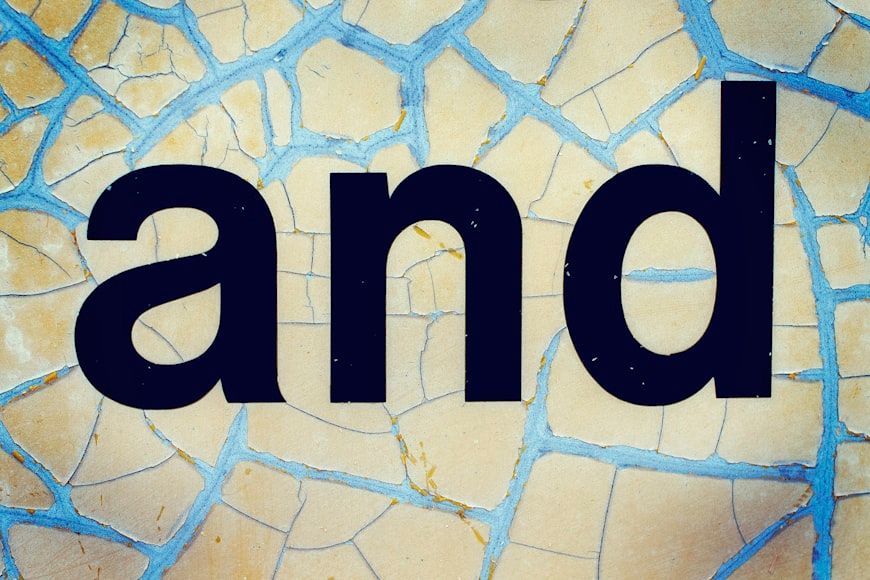
Image: Tim Mossholder

Much like prepositions at the end of sentences, conjunctions —such as and, but, so, or, nor, for, and yet— can go at the beginning of a sentence. This helps with emphasis, breaks up long sentences, and provides flexibility, although it is recommended to use them sparingly in this way.

5

The Oxford comma is mandatory

Image: Dan (mrpolyonymous on Flickr), CC BY 2.0, via Wikimedia Commons

The first issue here is that the serial comma, better known as the Oxford comma, is a punctuation issue, not a grammar rule. That aside, although it is recommended to avoid confusion caused by lengthy enumerations, in the end, it is a stylistic choice, and it is only considered mandatory in contexts that follow a certain style guide.

6

Adjectives should always precede the noun they modify
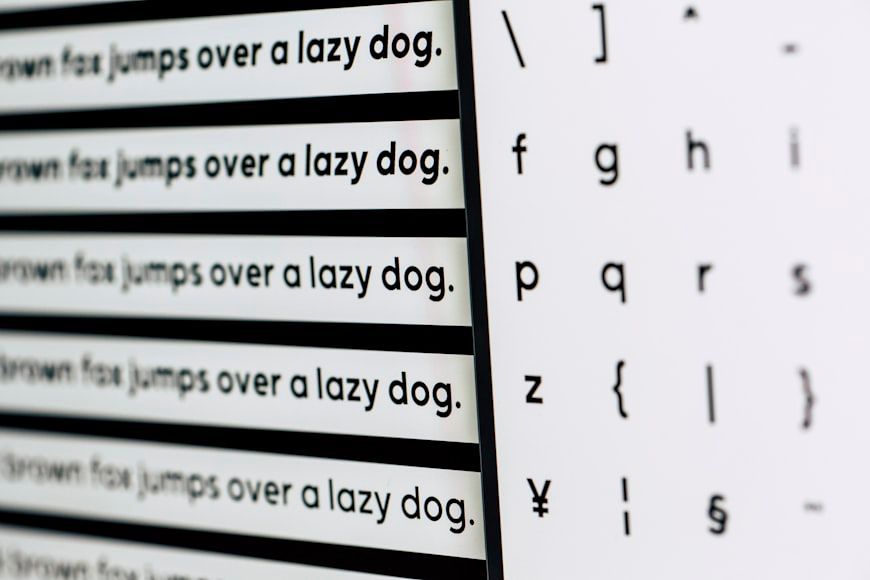
Image: Markus Spiske

Just because in most cases the adjective goes before the noun, it does not mean it should always do so. English speakers tend to naturally put the adjective first when talking about qualities and characteristics, but in many cases, putting the noun first will sound better. Again, it depends on your preferences and the flow of the sentence.

7

The subjunctive is mandatory for conditions uncertain or contrary to fact

Image: Christina @ wocintechchat.com M

While this is technically correct and subjunctive has been used this way for centuries, this rule mainly applies to written language and formal contexts. In colloquial English, speakers tend to use both the indicative and the subjunctive for uncertain or contrary-to-fact scenarios, such as saying "If I was you" and "If I were you". The choice almost always boils down to what sounds more natural.

8

‘They’, ‘their’, and ‘them’ should only be used for plural antecedents

Image: Towfiqu barbhuiya

Once an unbreakable rule, the use of ‘they’, ‘their’, and ‘them’ for a singular antecedent is widely accepted nowadays, even in the most formal contexts, to fill the gap left by the lack of gender neutral pronouns. In fact, many style guides recommend using these words as singular to avoid awkwardness and assuming someone’s gender.

9

A double negative will always be understood as positive

Image: Nick Fewings

"Two negatives make a positive", a rule you must have heard about in school. While this is a fact in math, it is not always true in grammar. In more standard English variants, the rule applies, especially in academic writing and formal contexts. However, informal dialects and vernaculars follow the ‘negative concord’: here, the second negative intensifies the first one instead of cancelling it.

10

‘None’ should always be followed by a singular verb

Image: Marcel Eberle

This is a myth made popular by old grammar books. ‘None’ can be used with both singular and plural verbs, depending on the meaning. When ‘none’ is used to mean ‘not any’, it is more natural to use a plural verb. When it means ‘not one’ or ‘not any of it’, the verb should be in the singular form. If you are unsure, pick the choice that sounds clearer and more natural.
What is a Twix, anyway?

Do you know what or who your favorite candy is named after?


Published on June 16, 2026


Image: Denny Müller

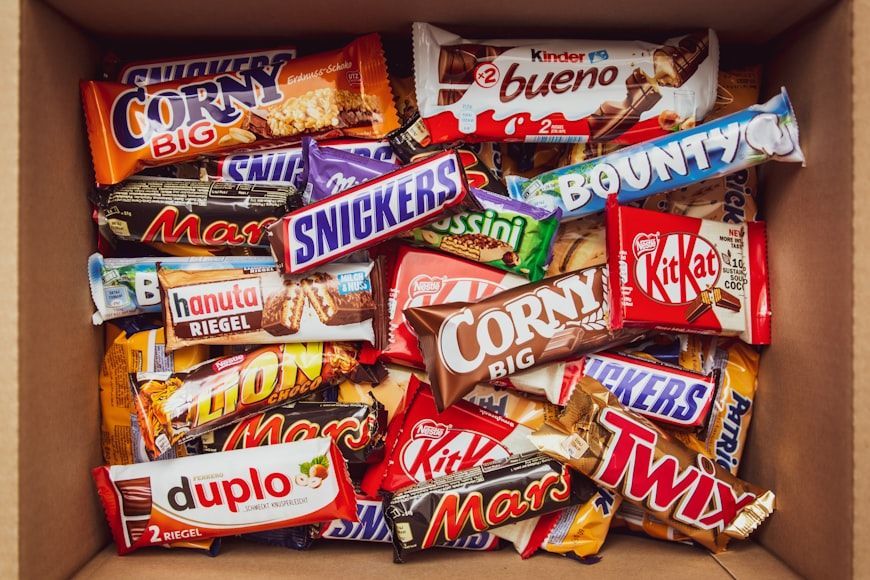
If you have never seen a Reese’s Peanut Butter Cup or an Almond Joy but only read the name, chances are that you would be able to form an idea of the product. But this is not always the case with candies and candy bars. Many of these delicious treats have names that do not seem to have any logical connection with their contents. But they do have it. Take a look at the following 12 famous examples. Did you know about any of these?

1

Snickers

Image: Shyam Mishra

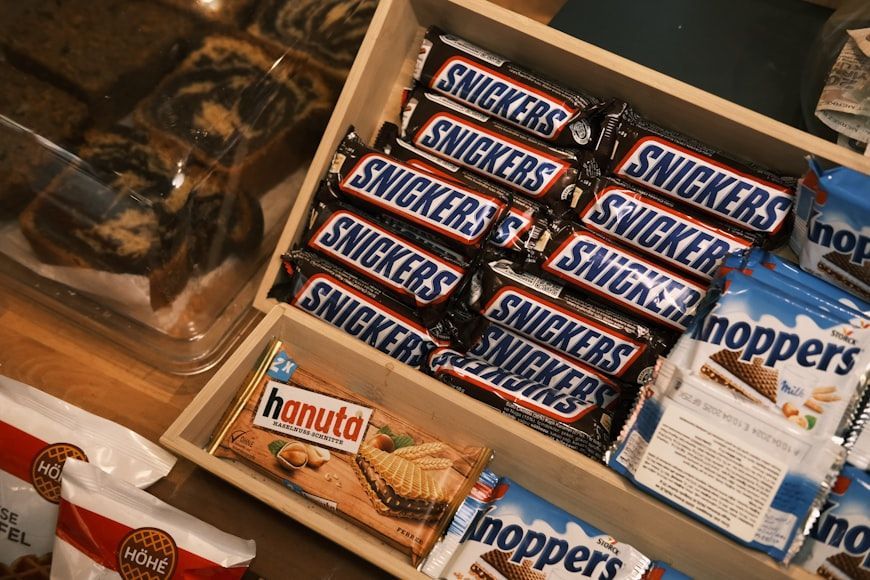
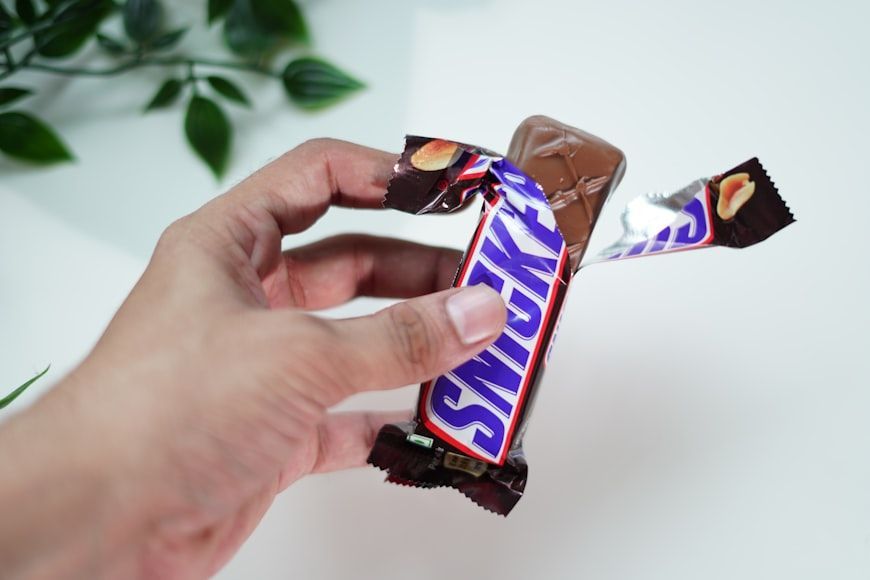
The Snickers bar, introduced by the Mars, Inc. company in 1930, was named after the Mars family's favorite horse. Snickers lived on their farm and was dearly loved.

Sadly, the horse passed away shortly before the candy bar's release, so naming the bar after him served as a tribute to their cherished companion.

2

Kit Kat

Image: Justin

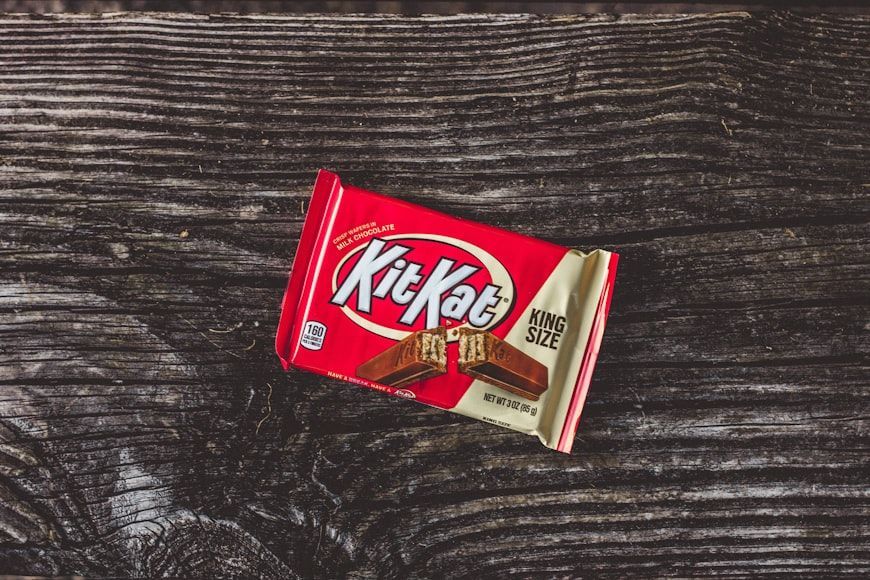
The name Kit Kat traces back to the 18th-century Kit-Cat Club in London, which itself was named after Christopher Catling, a pastry chef nicknamed "Kit Cat."

Rowntree's, the company that launched the bar in the 1930s, chose the name to give it a touch of history and sophistication.

3

M&M’s

Image: Irfan Zaini

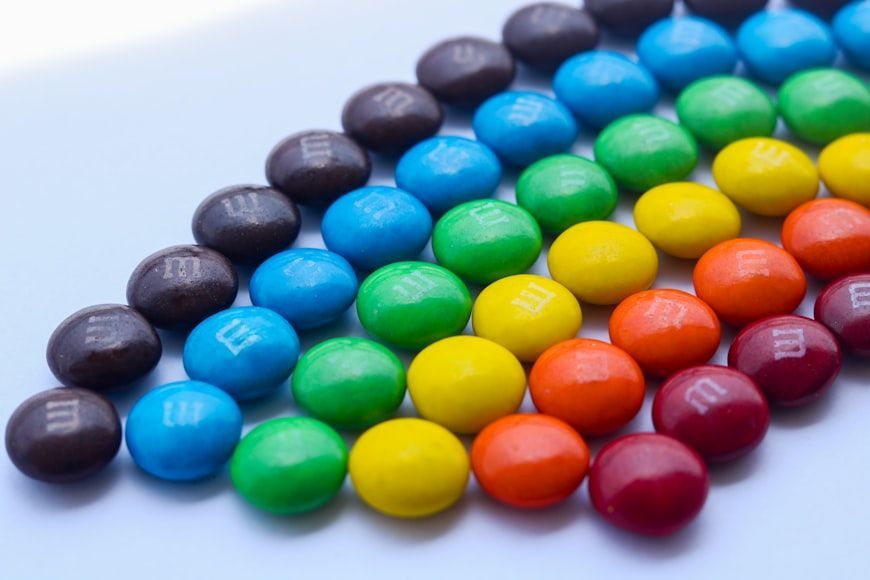
M&M’s stands for Mars and Murrie, the last names of the candy’s creators. Forrest Mars of the Mars Company teamed up with Bruce Murrie, son of Hershey’s president, and the delicious, colorful candies were born.

4

Starburst

Image: Alexander Schimmeck

Starburst got its name to reflect the candy’s bold, fruity flavors, like a burst of flavor in every bite.

Originally launched in the UK in 1960 as Opal Fruits, it was renamed Starburst for the U.S. release in 1967, likely to create a more dynamic, space-age image during the height of the space race.

5

Sour Patch Kids

Image: Steffen Rehfuß

Sour Patch Kids were originally called Mars Men when they debuted in the 1970s, playing off the era’s fascination with space.

When introduced in the U.S. in 1985, the name changed to Sour Patch Kids to tap into the Cabbage Patch Kids craze. The new name also highlights the candy’s signature sour-then-sweet taste.

6

3 Musketeers

Image: Cemrecan Yurtman

The 3 Musketeers bar got its name in 1932 from its original trio of flavors: chocolate, strawberry, and vanilla. Each bar came in three separate pieces, echoing the "three" theme.

The name also nodded to the popular novel The Three Musketeers. During World War II, rising costs of sugar and fruit led to the discontinuation of strawberry and vanilla, leaving only chocolate—the version we still enjoy today.

7

Milky Way

Image: Alan Pope

The Milky Way bar was named after a popular malted milk drink from the 1920s, not the galaxy.

The name was meant to suggest a creamy, rich flavor, echoing the appeal of the drink that inspired it.

8

Skittles

Image: Jonathan J. Castellon

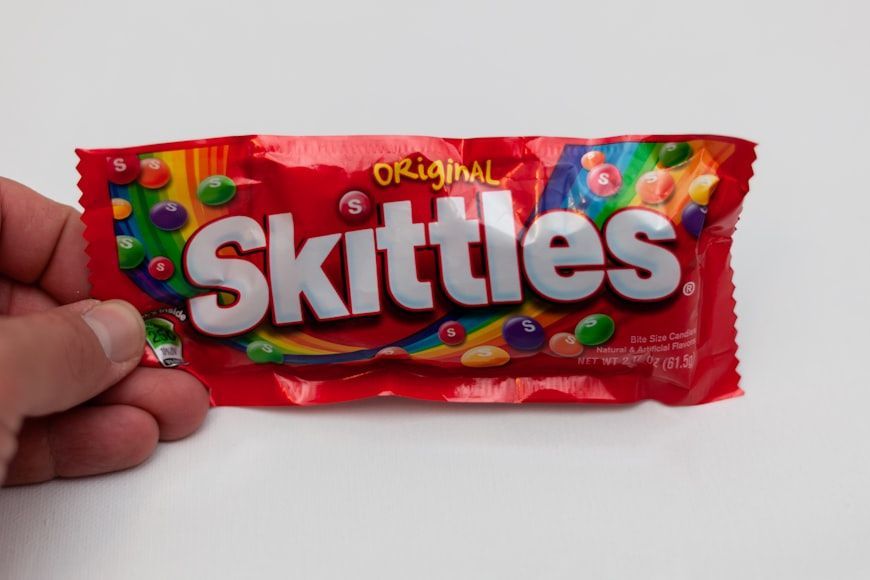
Skittles were named after the old European game of skittles, similar to bowling. The candy's round shape was the connection with the original game.

First produced in the UK in 1974 by a British distributor for Mars, Inc., the name was likely chosen to convey fun and flavor variety.

9

PayDay

Image: Erik Mclean

The PayDay bar got its name because it was first made on—yes, you guessed it—a payday at the Hollywood Candy Company. The timing inspired the name, which stuck.

Introduced in 1932 during the Great Depression, it was marketed as an affordable, energy-packed snack. With its combination of peanuts and caramel, it offered real substance, which can be a metaphor for a little "payday" in candy form.

10

Baby Ruth

Image: Louis Hansel

Anyone would be forgiven for thinking that the Baby Ruth bar was named after baseball legend Babe Ruth—but that’s not the case. The candy does indeed sound like it could honor the sports icon, but the Curtiss Candy Company claimed otherwise.

They stated that it was named after Ruth Cleveland, the daughter of President Grover Cleveland.

11

100 Grand Bar

Image: NATasha Nguyen

The 100 Grand bar was originally called the $100,000 Bar, inspired by quiz shows with big prizes, such as The $64,000 Question.

In the mid-1980s, Nestlé renamed it 100 Grand, likely to ease trademark issues and generate a greater appeal by simplifying the name.

12

Twix

Image: Petr Magera

The name Twix is a blend of the words "twin" and "sticks," referring to its two chocolate-covered biscuit bars. It was first released in the UK in 1967 under the name Raider.

When introduced in the U.S. in 1979, the bar was renamed Twix. The twin-bar design later inspired the playful "Left vs. Right Twix" advertising campaign.

Looking for an extra scoop of literary fun?

Learn more with our Word of the day

seminal

/ˈsɛmən(ə)l/