Ten delicious food words that recently made it into the dictionary


Published on November 8, 2026

Image: racool_studio

A word doesn’t enter the dictionary overnight. Instead, it gets added when it achieves widespread and sustained usage. Every year, lexicographers (professionals in charge of updating dictionaries) go through menus, food blogs, social media, and everyday conversations to see how our food culture is expanding. The 10 terms listed in this article show how our culinary vocabulary grows richer, including foreign terms that have come into common use without needing to be translated.

1

Rösti

Image: Maren Winter

Traced back to Switzerland, rösti (or roesti) began as a humble breakfast staple for farmers in the canton of Bern before becoming a national dish. It consists of coarsely grated potatoes pan-fried in butter until a golden, crispy crust forms.

The term is borrowed from the Swiss German Rööschti, which is short for Härdöpfelrööschti, meaning "pan-cooked potatoes." Rösti entered the English dictionary when chefs adopted it to differentiate this alpine potato cake from American hash browns.

2

Speculoos

Image: juefraphoto

Before it got its official spot in the dictionary, speculoos was already familiar thanks to airline snack packs and commercial cookie butter spreads. Originating in Belgium and the Netherlands, speculoos is a thin, crisp shortbread cookie spiced with cinnamon, nutmeg, cloves, and ginger, typical of Christmastime. It comes from the Dutch word speculatie, meaning "spice cookie." English dictionaries added the word when food writers, retail packaging, and dessert blogs made speculoos popular.

3

Toum

Image: Lizaveta_K

If you love Middle Eastern street food like shawarma, falafel, or kebabs, you’ve almost certainly enjoyed toum. Originating in the Levant (a historical and geographical region in the eastern Mediterranean), toum is a silky, white sauce made by emulsifying fresh garlic cloves with oil, lemon juice, and salt. The term comes from the Arabic thūm, which means "garlic." Before entering English in the 21st century, the word passed through French, acquiring its spelling toum.

4

Dunkel

Image: Ksenz-E

If you are a fan of craft beer, you’ve likely run into a dunkel at your local brewery. Originating in Bavaria, dunkel is the German word for "dark," and in the beer world, it refers to a classic style of slightly sweet dark lager. The term entered the English dictionary when the craft beer boom of the 21st century brought traditional European brewing methods into America.

5

Bao

Image: CapturePB

Short, sweet, and popular, the term bao took the casual dining scene by storm around the world. Derived from Chinese cuisine, bao refers to a warm, pillowy steamed dough bun that can wrap around several savory ingredients like pork, braised meats, and pickled veggies.

In Chinese, bāo can be used as a verb to mean "to wrap, surround," and as a noun meaning "bundle, package, envelope." Lexicographers added bao to the English dictionary after it went directly from traditional dim sum menus to street food spots and frozen grocery aisles.

6

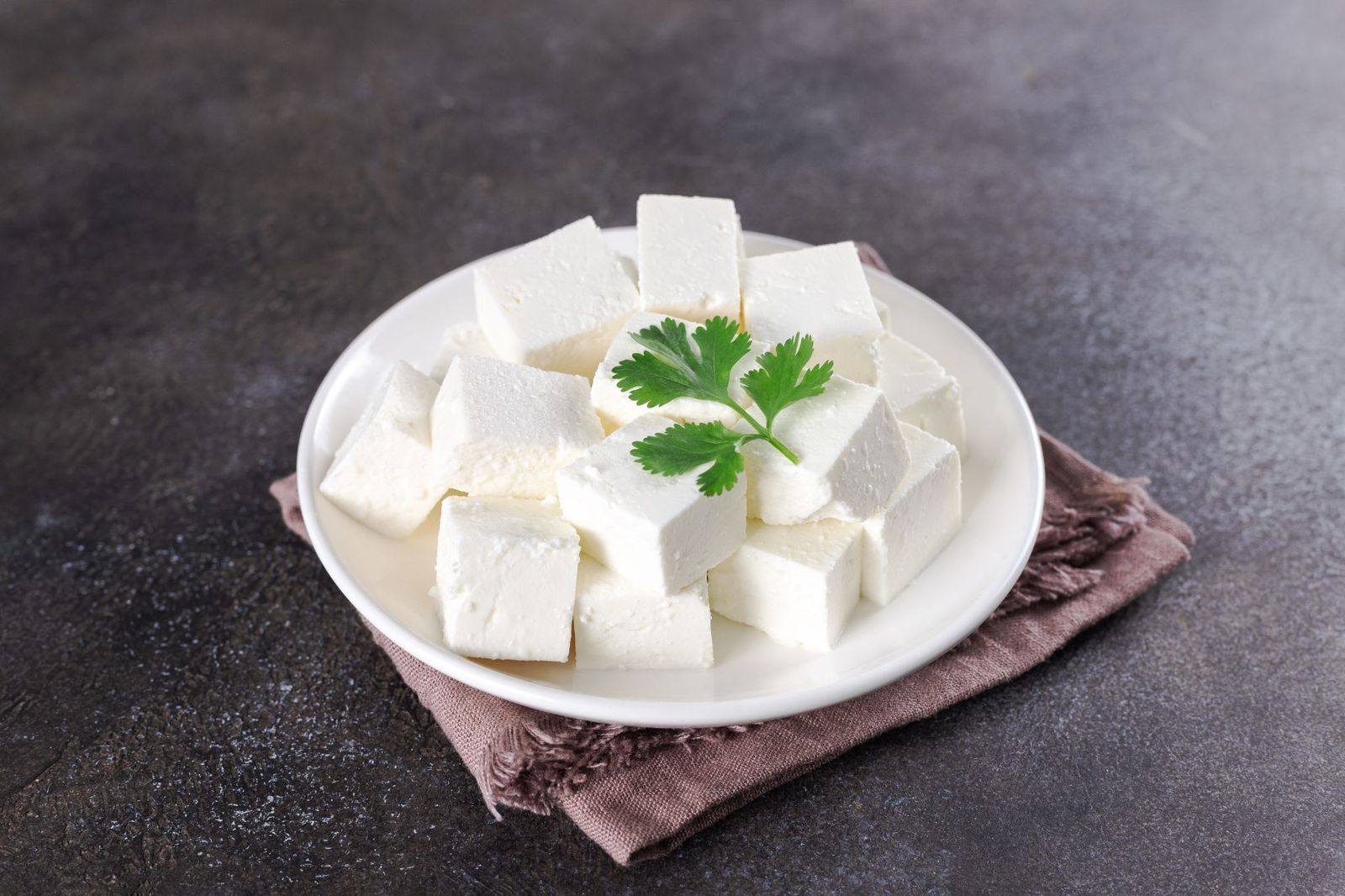
Paneer

Image: Ana_Malee

A staple of Indian cooking, paneer is a fresh curd cheese made by setting warm milk with lemon juice or fruit acid until firm. It’s later cut into cubes and used in famous dishes like palak paneer and tikka masala. The term paneer comes from panīr, "cheese" in both Hindi and Urdu. Its entry into our dictionary reflects the integration of Indian cuisine into everyday English cooking conversation.

7

Monkey bread

Image: Carey Jaman

Monkey bread is a favorite of North American home bakers. It refers to a pull-apart pastry formed from individual dough balls baked together in a bundt pan. Often covered with melted butter and dusted with cinnamon sugar (or prepared with garlic and herbs as a savory alternative), it earned its name because people grab pieces with their fingers. After decades of the term appearing in baking books, recipe sites, and menus, lexicographers officially catalogued it in English dictionaries.

8

Albondiga

Image: New Africa

Borrowing from Spanish, an albondiga is a seasoned meatball typically included in tapas or Latin American tomato sauces. Spanish speakers adopted the Andalusian Arabic al bunduqa, from al ("the") + bunduqa ("hazelnut, small ball."). While meatballs exist in nearly every culture, the term albondiga entered English dictionaries due to the increasing popularity of traditional Spanish dishes and small-plate dining.

9

Palmier

Image: New Africa

Named after its resemblance to a palm leaf or butterfly wings, a palmier is a classic French pastry crafted from rolled puff dough dusted with sugar. As French baking techniques and specialized patisseries became popular across English-speaking countries, food critics and TV baking competitions left behind the informal translation ("elephant ears") in favor of the authentic French term.

10

Gose

Image: Jarretera / Shutterstock.com

Gose is a tart, low alcohol wheat beer fermented with coriander and sea salt. Pronounced GO-zuh, the name of this unique brew comes from Germany, specifically from Gose, a stream near Goslar, a town where this type of beer was first brewed. While the word existed historically in German regional brewing, it entered the English dictionary recently when American and European breweries revived the style.



Nothing is set in stone

Less a rule, more a suggestion: Grammar rules that are not mandatory


Published on November 8, 2026


Image: Markus Winkler

Unlike languages like French or Spanish, the English language does not have an official academy that registers the use of the language and determines which rules still apply and which are obsolete. While institutions such as the Oxford Dictionary help with standardizing and registering the language, English evolves through the daily use of its speakers, and its rules evolve with it.

As a consequence, some rules are more fixed than others, and many of them are not so much rules as they are stylistic choices. Does this mean we can write however we please? Not exactly, but it means that many "rules" are not set in stone. Let’s see some language mandates that are more of a guideline.

1

Sentences should never end in a preposition

Image: Austin Chan

As evidenced by daily language, it is perfectly acceptable to end a sentence with a preposition, no matter the context or the formality. In fact, it’s something that speakers tend to do naturally. The idea that ending sentences with a preposition is incorrect is a myth left over by 17th-century grammarians trying to impose Latin grammar on the English language.

2

You should never split an infinitive

Image: Megan Watson

‘To run quietly’ or ‘To quietly run’, which one is correct? The answer is both. The choice to place an adverb after the infinitive or in the middle of it has nothing to do with proper grammar, but with emphasis and sounding more natural. Again, this "rule" is a leftover from Latin grammar.

3

You should always use ‘whom’ when referring to the object

Image: Artem Beliaikin

Not so long ago, this rule was set in stone, and saying "to who?" instead of "to whom" would get you a few stares. However, rules change as people change, and the use of ‘who’ to refer to the object has become increasingly more common. However, this only applies to informal contexts. In a more formal setting, it is recommended to still use ‘whom’.

4

Sentences should never start with conjunctions

Image: Tim Mossholder

Much like prepositions at the end of sentences, conjunctions —such as and, but, so, or, nor, for, and yet— can go at the beginning of a sentence. This helps with emphasis, breaks up long sentences, and provides flexibility, although it is recommended to use them sparingly in this way.

5

The Oxford comma is mandatory

Image: Dan (mrpolyonymous on Flickr), CC BY 2.0, via Wikimedia Commons

The first issue here is that the serial comma, better known as the Oxford comma, is a punctuation issue, not a grammar rule. That aside, although it is recommended to avoid confusion caused by lengthy enumerations, in the end, it is a stylistic choice, and it is only considered mandatory in contexts that follow a certain style guide.

6

Adjectives should always precede the noun they modify

Image: Markus Spiske

Just because in most cases the adjective goes before the noun, it does not mean it should always do so. English speakers tend to naturally put the adjective first when talking about qualities and characteristics, but in many cases, putting the noun first will sound better. Again, it depends on your preferences and the flow of the sentence.

7

The subjunctive is mandatory for conditions uncertain or contrary to fact

Image: Christina @ wocintechchat.com M

While this is technically correct and subjunctive has been used this way for centuries, this rule mainly applies to written language and formal contexts. In colloquial English, speakers tend to use both the indicative and the subjunctive for uncertain or contrary-to-fact scenarios, such as saying "If I was you" and "If I were you". The choice almost always boils down to what sounds more natural.

8

‘They’, ‘their’, and ‘them’ should only be used for plural antecedents

Image: Towfiqu barbhuiya

Once an unbreakable rule, the use of ‘they’, ‘their’, and ‘them’ for a singular antecedent is widely accepted nowadays, even in the most formal contexts, to fill the gap left by the lack of gender neutral pronouns. In fact, many style guides recommend using these words as singular to avoid awkwardness and assuming someone’s gender.

9

A double negative will always be understood as positive

Image: Nick Fewings

"Two negatives make a positive", a rule you must have heard about in school. While this is a fact in math, it is not always true in grammar. In more standard English variants, the rule applies, especially in academic writing and formal contexts. However, informal dialects and vernaculars follow the ‘negative concord’: here, the second negative intensifies the first one instead of cancelling it.

10

‘None’ should always be followed by a singular verb

Image: Marcel Eberle

This is a myth made popular by old grammar books. ‘None’ can be used with both singular and plural verbs, depending on the meaning. When ‘none’ is used to mean ‘not any’, it is more natural to use a plural verb. When it means ‘not one’ or ‘not any of it’, the verb should be in the singular form. If you are unsure, pick the choice that sounds clearer and more natural.

Looking for an extra scoop of literary fun?

Learn more with our Word of the day

neglect

/nəˈɡlɛk(t)/