Stick to the beat

"Every breath you take" and 10 other songs that can save lives


Published on May 25, 2026

Image: NEOSiAM 2024+

When someone needs CPR, rhythm matters. A steady beat between 100 and 120 BPM (beats per minute) helps keep compressions at the right pace. Many people remember that the Bee Gees’ hit "Stayin’ Alive" is one of those anthems that lives in that sweet BPM spot. But here is a list of 11 songs that are iconic, catchy, and, yes, can help save a life.

1

"Stayin’ Alive" – Bee Gees (103 BPM)

Image: KoolShooters

This is the CPR anthem for a reason. Not only does the beat sit perfectly in the recommended range per the American Heart Association (100-120 bpm), but the song actually became part of CPR training after doctors realized its tempo matched ideal compressions per minute.

Barry, Robin, and Maurice Gibb wrote "Stayin' Alive" in a matter of days. The song was written in 1977 specifically for the Saturday Night Fever soundtrack, and the Bee Gees wrote a total of four tracks for the film. It hit number one around the world and has never really left. But its second life as a CPR tool may be its greatest legacy.

2

"Every Breath You Take" – The Police (110 BPM)

Image: Rene Terp

This 80s anthem became one of the most played songs in radio history. Its minimalist guitar pattern and calm, deliberate tempo make it especially easy to follow during CPR; steady, predictable, unhurried.

Author Sting, who composed it while on holiday in Jamaica in 1982, says that he woke up one night with the first three lines in his mind and sat down at the piano to write it; half an hour later, the best-selling single of 1983 was finished. It has been called "the most played song in radio history."

3

"Respect" – Aretha Franklin (115 BPM)

Image: Elviss Railijs Bitāns

"Respect" was written and originally recorded by Otis Redding, released in 1965 as a single.

When Aretha Franklin reimagined it, she showed up at the New York studio with the arrangement worked out in her head, including the iconic spelling of R-E-S-P-E-C-T, which she developed with her sisters Carolyn and Erma.

When her version was released in 1967, it was a statement of independence. It topped the Billboard charts and won Franklin two Grammy Awards. But perhaps its biggest pride was being ranked number one in the 2021 Rolling Stone list of "Greatest Songs of All Time."

4

"Another One Bites the Dust" – Queen (110 BPM)
Image: RDNE Stock project

A beat that can save lives, or at the very least have everyone nodding along. Bassist John Deacon came up with that iconic bass line after getting inspired by funk and disco, especially the band Chic’s "Good Times." The groove was so good that Michael Jackson approached Queen and said to them, "You guys are mad if you don't release it as a single." The band wasn’t convinced, but followed the advice.

Michael Jackson was right. The song became Queen's best-selling single, with sales of over 7 million copies, and stayed on the Billboard Hot 100 for almost a year. Silvester Stallone, creator and star of Rocky, wanted to use the song in the first installment of the boxer’s movie. The band declined, and he turned to Survivor, who created "Eye of the Tiger."

5

"I Will Survive" – Gloria Gaynor (117 BPM)
Image: Damian Scarlassa

When Gloria Gaynor recorded this anthem, she was wearing a back brace from her hips to her underarms. She had suffered a serious fall on stage in New York, had undergone spinal surgery, and was recovering.

But producers Freddie Perren and Dino Fekaris insisted that this new song be recorded. It was released in 1978 and quickly became people’s favorite. Gaynor later said that when she sang "I will survive," she was thinking about surviving her surgery. This song is a universal anthem of resilience and empowerment; It’s only proper that we should remember that it can help others survive, too!

6

"Eye of the Tiger" – Survivor (109 BPM)
Image: Méline Waxx

In 1982, Queen rejected Sylvester Stallone’s request to use "Another One Bites the Dust" for Rocky III. So the star called Survivor’s songwriters Jim Peterik and Frankie Sullivan, who sat down to record a demo for him.

Stallone liked the demo very much that he used that very version in the film, without waiting for the studio re-recording. This song is now synonymous with motivation and dedication. That punchy opening guitar riff is one of the most famous intros in rock.

7

"Man in the Mirror" – Michael Jackson (100 BPM)
Image: Pixabay

Michael Jackson didn't write this one. It was written by singer Siedah Garrett and composer Glen Ballard, after Quincy Jones invited a group of songwriters to his home and told them simply: "I just want hits."

It peaked at No. 1 in 1988 and remains one of Jackson’s most socially conscious recordings. The slow and steady tempo is right at the bottom of CPR’s rhythm sweet spot.

8

"Dancing Queen" – ABBA (101 BPM)

Image: Karley Kosmos

You can dance, you can jive… And, yes, you can use it to keep your tempo. ABBA’s only No. 1 hit in the United States, and arguably the happiest three minutes in ’70s pop. The group reportedly knew it was special the moment they recorded it.

"Dancing Queen" was written by Benny Andersson and Björn Ulvaeus, who originally titled it "Boogaloo." ABBA performed the song in 1976 in a televised gala celebrating the wedding of the Swedish King and Queen, the night before their actual wedding. It very quickly became the group’s biggest international hit.

9

"Girls Just Want to Have Fun" – Cyndi Lauper (120 BPM)

Image: cottonbro studio

Fun fact: this was originally written by a Philadelphia musician named Robert Hazard in 1979. So, it was sung from a male perspective, explaining to his parents why girls just wanted to have fun.

When producers brought the song to Cindy Lauper, however, she found the original lyrics unacceptable: she agreed to rewrite it into a feminist party anthem. The result became one of the defining songs of the 1980s. Today, Cindy Lauper’s classic is high-energy, bright, and reliable, another well-known song to give CPR to, right at the top of the ideal range at 120 BPM.

10

"Sweet Home Alabama" – Lynyrd Skynyrd (104 BPM)
Image: freestocks.org

This song was born as a direct response to Neil Young's songs "Southern Man" and "Alabama," which Ronnie Van Zant felt unfairly painted the entire South as racist. It was published in 1974 and became the band’s highest-charting single. Young later said that he respected the shot the band had thrown at him, because he later found his own song "Alabama" condescending and accusatory.

Through the years, "Sweet Home Alabama" became a stadium staple, a movie soundtrack regular, and a symbol of classic Southern rock. Plus, now you know that that strong mid-tempo groove is a CPR metronome in disguise.

11

"I’m Gonna Be (500 Miles)" – The Proclaimers (116 BPM)
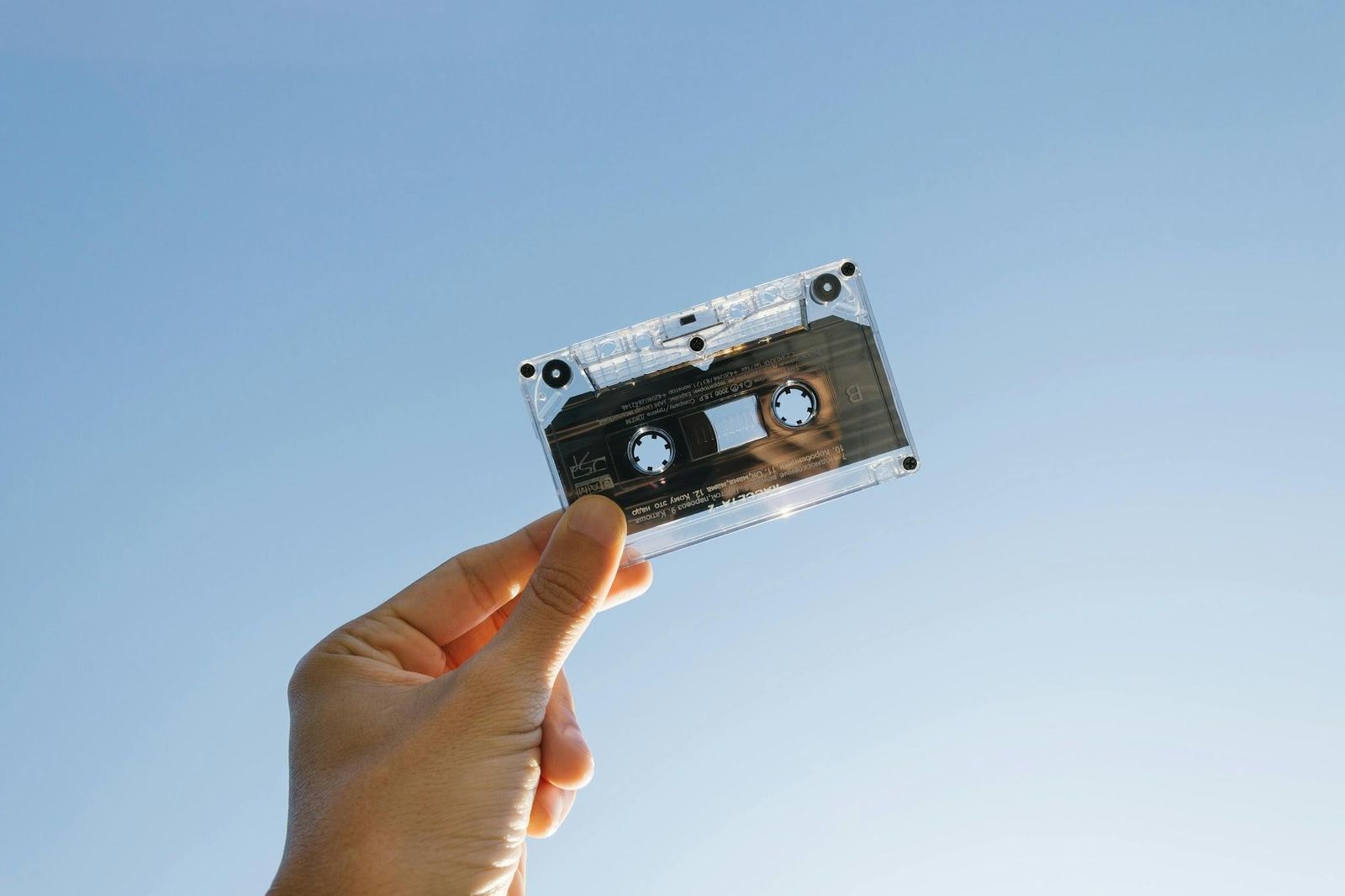
Image: Stas Knop

Craig Reid, who wrote the song in the 80s, said about it, "I knew it was a good song, maybe even a single, but I had no idea how popular it would become." For some years, it had modest success in the UK. Then, it appeared on the soundtrack of the 1993 Johnny Depp film Benny & Joon, which skyrocketed its fame.

The march-like beat at 116 BPM is practically designed to keep you on pace, which, when you're performing CPR, is exactly what you need.


ADD A TOUCH OF EXOTIC FLAIR TO YOUR LEXICON

12 Words that Sound Better in Other Languages


Published on May 25, 2026


Image: Alexandra

While the term "better" is a subjective one in this regard, we took the liberty of gathering some words that, at the very least, sound interesting, melodic, or even mysterious. Discovering words in foreign languages that sound more enchanting than their English counterparts is like stumbling upon a linguistic treasure trove.

From Italian's rhythmic allure to French's lyrical grace, certain words defy a precise translation. Join us in this journey through some of those foreign terms. You may even adopt a new word by the time you finish reading.

1

Etoile

Image: Reign Abarintos

In the world of linguistic elegance, the French word étoile can be described as a celestial gem. Literally translating to "star," this term evokes images of twinkling luminosity in the vast expanse of the night sky.

Étoile is an omnipresent word in the realms of art, fashion, and aspiration. From haute couture to poetic verses, "étoile" gracefully encapsulates the essence of celestial allure, leaving an indelible mark on both language and imagination.

2

Sacrebleu

Image: Julien L

While the Italians may have some legendary insults, it is the French who make a second appearance in this list with this minced oath. Sacrebleu is a spirited exclamation that literally translates to "sacred blue."

The term historically emerged as an alternative to the stronger sacré dieu, to avoid invoking God's name. It stands today as a linguistic relic, and it's not commonly used by the French.

3

Bon appetit

Image: Steffan Vladimirov

Another famous French term makes its appearance. Bon appétit is a delightful and universally recognized phrase that extends far beyond the wish for a good meal.

Translating to "good appetite," this expression serves as a warm invitation to savor and enjoy the culinary delights before you. Rooted in the heart of French gastronomic culture, it reflects a genuine appreciation for the pleasures of fine dining. Uttered with contagious enthusiasm, bon appétit not only signals the beginning of a meal but also communicates the spirit of sharing and the joy of indulging in great flavors.

4

Poubelle

Image: Sven Brandsma

Yes, we said that better is a subjective term in this list, but it's hard to disagree that poubelle sounds a lot better than "garbage." The softer sound and the lack of hard consonants make it quite a mellifluous word.

Undoubtedly, the French pronunciation adds a certain flair, elevating the act of discarding to a more refined gesture. In the banality of poubelle, we can find a subtle reminder that even in the routine of disposal, there can be a touch of cultural grace.

5

Esperanza

Image: Lina Trochez

Hope is a beautiful word. But Spanish speakers also have a lovely term to express this sentiment. Esperanza is a word that resonates with a profound sense of optimism.

A direct translation of "hope," it carries a weight far beyond its lexical definition.

It is rooted in the Latin verb sperare, which means "to hope." Esperanza embodies a resilient anticipation of positive outcomes. In Spanish-speaking cultures, the word goes beyond linguistic bounds to symbolize a virtue, a guiding force in times of adversity.

6

Cosquillas

Image: Gabe Pierce

The second Spanish language appearance in our list, cosquillas is a term that dances off the tongue with a light, playful cadence. Translating to "tickles," this word embodies a delightful sensation, evoking smiles and spontaneous laughter.

In its simplicity, the word cosquillas encapsulates the universal experience of being gently tickled: a sensation that transcends linguistic and cultural barriers.

7

Siesta

Image: Adrian Swancar

The third and final contribution of the Spanish language to our list, siesta is a word that resonates with a cultural rhythm, embodying the cherished tradition of a midday rest. Literally translating to "nap," this term originates from the Latin hora sexta or "sixth hour."

This word represents not just a physical repose but a cultural appreciation for balance and well-being. Amidst the demands of daily life, taking a moment to pause and rejuvenate is a practice worthy of celebration.

8

Saudade

Image: Billy Williams

Saudade is a poignant term deeply rooted in Portuguese culture, symbolizing a complex emotional landscape. Beyond its literal translation of "longing" or "nostalgia," this word embodies a profound sense of missing someone or something.

It's a unique expression that brings up the pain of an absence, the feeling of missing a gone moment. Saudade is a worthy testament to the Portuguese soul, acknowledging the beauty found in the transient nature of life and the marks left on us by what once was.

9

Farfalla

Image: Roberto Lisi

If this term conjures up images of a specific type of pasta resembling a bowtie or a pair of small wings, that is no coincidence. Farfalla is an Italian word that dances off the lips like a delicate flutter, simply meaning "butterfly."

Its pronunciation evokes the gentle flapping of a pair of butterfly wings and embodies the delicate metamorphosis from cocooned stillness to graceful flight under the warmth of the Mediterranean sun.

10

Kilig

Image: Nick Fewing

While it can be translated to "thrill" or "shiver," the Filipino word kilig encapsulates the beautiful sensation associated with romantic excitement. It's more than a word: it's a cultural phenomenon that extends beyond language to become a common experience in the world of love and courtship.

11

Boondocks

Image: Timur Garifov

Another word originally borrowed from the Filipino language, boondocks comes from the term bundok which refers to remote, rural areas, often far from urban centers. Beyond its common English use, the Filipino version enriches the term with a sense of untouched landscapes and a simpler way of life.

Going to the boondocks conjures images of moving to a serene countryside, where nature thrives undisturbed, and community bonds are strong.

12

Utepils

Image: Donovan Grabowski

Imagine having a word that singlehandedly portrays the pleasure of having a cold beer in the sun. For Norwegian people, that word exists. Utepils is a term that resonates with the heartwarming essence of their culture, encapsulating the ritual of enjoying a beer outdoors, typically in the open air.

Beyond its literal translation to "outside beer," this word represents a cherished tradition—a moment of relaxation and friendship beneath the Nordic sun. Utepils is more than a beverage: it's a celebration of fleeting sunshine and the appreciation of nature's beauty.

Looking for an extra scoop of literary fun?

Learn more with our Word of the day

minute

/maɪˈnut/