Time changes everything

Do secretaries still keep secrets? 12 job titles that meant other things


Published on July 23, 2026
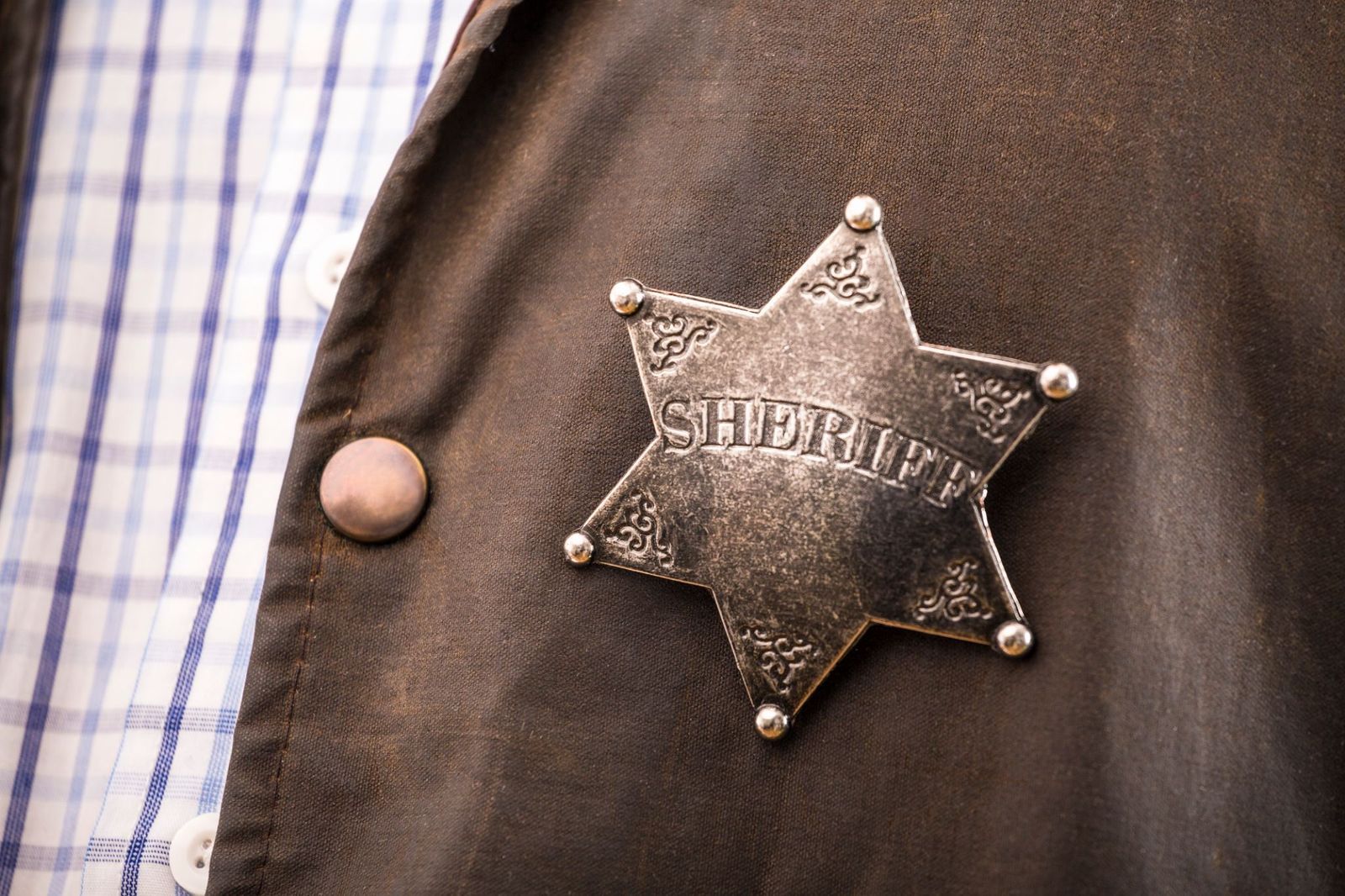

Image: Sopotnicki

Language preserves history in unexpected places. Many job titles that seem ordinary today began with entirely different meanings, reflecting the needs of medieval kingdoms, noble households, religious institutions, and even long-forgotten professions. Although the work behind these titles has changed dramatically over the centuries, the words themselves continue to carry traces of the past wherever they are used.

1

Secretary

Image: Vitaly Gariev

Today, a secretary is usually associated with calendars, correspondence, and office organization. But centuries ago, a secretary was a trusted keeper of confidential information. The word comes from the Latin secretarius, referring to someone entrusted with secrets and private affairs.

In royal courts and governments, secretaries often served as influential advisers rather than clerical workers. The title still carries traces of that earlier status in positions such as Secretary of State, where the role involves high-level decision-making rather than routine paperwork.

2

Clerk

Image: Stokkete

A modern clerk may work in an office, store, courthouse, or government agency. Originally, however, a clerk was a member of the clergy. During the Middle Ages, churches and monasteries were among the few places where people regularly learned to read and write.

Because clergy handled many written records, the word gradually became associated with literacy itself. As education spread beyond religious institutions, the meaning shifted from "churchman" to someone responsible for records, documents, and administrative work.

3

Marshal

Image: Scott Cornell

Today, marshals are often law enforcement officers or senior military officials. The title has surprisingly humble roots. It comes from an old Germanic term meaning something close to "horse servant" or "keeper of horses."

In medieval times, horses were essential for transportation, communication, and warfare. The official responsible for managing them gained increasing authority, and over centuries, the role evolved into one of the most prestigious military and governmental titles in many countries.

4

Sheriff

Image: Sanit Fuangnakhon

Modern Americans know sheriffs as elected county law-enforcement officials. The title dates back more than a thousand years to Anglo-Saxon England, where a sheriff was known as a shire-reeve.

A shire was a county, and a reeve was a royal administrator. Early sheriffs collected taxes, enforced the king’s orders, managed courts, and supervised local government. Fighting crime was only one part of a much broader set of responsibilities.

5

Butler

Image: Jeremy Walter

The butler is often portrayed as the head servant in a grand household. Yet the job originally revolved around something much more specific: wine. Early butlers were responsible for managing wine cellars and serving valuable beverages.

Because wine represented both wealth and status, the position required trust and responsibility. Over time, butlers gained authority over other servants and eventually became the chief managers of large households.

6

Steward

Image: Skytech Aviation

Today, the title steward may be used for airline attendants, ship personnel, or event supervisors. Historically, a steward was a powerful official responsible for managing a noble household, estate, or even an entire territory.

The word comes from Old English terms meaning "household guardian." Medieval stewards oversaw finances, property, staff, and daily operations. Some became influential political figures who effectively governed on behalf of kings and nobles.

7

Doctor

Image: Online Marketing

Most people immediately think of medicine when they hear the word doctor. Originally, however, a doctor was simply a teacher. The word comes from the Latin docere, meaning "to teach."

Medieval universities awarded the title to scholars qualified to instruct others at the highest level. Long before it became closely associated with physicians, doctors could be experts in theology, law, philosophy, and other academic disciplines.

8

Minister

Image: Alexandros Michailidis

A minister today can lead a government department or serve as a religious leader. The word’s original meaning is surprisingly modest. In Latin, minister meant "servant" or "attendant."

The title emphasized service rather than authority. Over time, ministers became trusted representatives of rulers and governments, eventually overseeing major areas of public policy while retaining a word that originally suggested humility and assistance.

9

Engineer

Image: Scott Blake

Modern engineers design everything from skyscrapers to software. The title originally referred to specialists who built or operated military "engines," a term once used for siege machines such as catapults and trebuchets.

These experts combined technical skill with practical problem-solving. As technology expanded during the Industrial Revolution, the meaning broadened dramatically, eventually encompassing the countless engineering fields that exist today.

10

Accountant

Image: Scott Graham

An accountant now manages financial records, audits, taxes, and budgets. Historically, the role was more closely tied to giving an account: that is, explaining how money or resources had been used.

Kings, merchants, and estate owners needed trusted individuals to report on financial matters. As trade and commerce became more complex, accounting evolved into a highly specialized profession recognized around the world today.

11

Computer

Image: Alex Knight

For centuries, a computer was not a machine at all. It was a person whose job involved performing calculations. Governments, observatories, universities, and scientific organizations employed teams of human computers to solve mathematical problems.

Human computers played important roles in astronomy, navigation, engineering, and even early space research. Only in the mid-20th century did electronic machines become so closely associated with the work that they inherited the title themselves.

12

Pilot

Image: Blake Guidry

Today, pilots are most commonly associated with airplanes. Yet the word was guiding vessels long before powered flight existed. Originally, a pilot was an expert navigator who directed ships through difficult harbors, rivers, and coastal waters.

These specialists relied on detailed local knowledge to help vessels avoid hazards and reach their destinations safely. When aviation emerged in the early 1900s, the title naturally transferred to those guiding aircraft through the skies.


COLORS IN MUSIC

Paint The Town Red With 10 Colorful Songs


Published on July 23, 2026


Image: Icons8 Team

Music is a powerful tool that explicitly evokes all kinds of emotions. Colors, on the other hand, have a more subtle way of arousing feelings. Various theories have been developed to study the psychology behind colors and they all agree that they can be as powerful as music. So imagine what happens when you put those two things together. "Back to black" takes you right to the dark, low moments of life, while "Yellow Submarine" can already make you feel cheerful, doesn’t it?

Join us as we explore ten songs that have used colors to further express their messages.

1

Purple Rain

Image: Alexander A.

The first item in our list not only blends colors and music but also combines multiple music styles: rock, R&B, gospel, and orchestral music. Only Prince could have done it!

Purple Rain is a song from 1984, part of the album of the same name, written and performed by Prince with his backing band, The Revolution.

Now, what does it mean? Prince himself explained that it is a reference to the sky and it represents letting your faith guide you to be with the one you love, even when it seems impossible. Quite a profound start, isn’t it?

2

Yellow Submarine

Image: 2H Media

Songs, lyrics, and music are filled with individual interpretations which can vary greatly. Yellow Submarine by The Beatles is quite representative of that. The song, written by the English band as part of their album Revolver in 1966 was subject to opinions and interpretations from the very beginning.

Some deemed it empty of meaning, while teenagers of the time embraced it to create their own chants of protest. And some even take it as a metaphor for how The Beatles perceived themselves as prisoners of their own fame. Whatever we take as the truth, nobody can deny it is a great song.

3

Back To Black

Image: Volkan Olmez

Back to Black was written by English singer-songwriter Amy Winehouse in 2006 and instantly became an international success. Considering how short and troubled Winehouse’s life was, critics consider this song the purest expression of her complex mind.

It is her signature song and describes the difficult time she was going through at the time. Black is the color that best reflects how lonely life can get and how devoid of hope a person can get. Even in the most tragic ending, Winehouse still resonates with our society through this iconic song.

4

Brown Eyed Girl

Image: Ernesto Norman

Just another song that belongs in the greater leagues as it’s in the Grammy Hall of Fame, among other achievements.

Released in 1967,Brown Eyed Girl by Van Morrison describes, naturally, a romance of the past in the most nostalgic way. Innocence, youth, and happy memories are all implied in the lyrics and the upbeat rhythm completes the picture it paints.

5

Blue Hawaii

Image: Lo Sarno

Many songs, like this one, are written specifically for film productions. Blue Hawaii for example, was written in 1937 by Leo Robin and Ralph Rainger for a film called Waikiki Wedding.

However, that is not the only film featuring it, as it was so successful, that it received several covers in the following years. Probably, the most famous one was performed by Elvis Presley in the namesake film of 1961.

The color of the ocean and that dreamy location set the scene in a rather straightforward way and it makes us wish we were there, right?

6

Goodbye Yellow Brick Road

Image: Victor Li

It is not uncommon to see hints of autobiographical notes in songs. Goodbye, Yellow Brick Road by Elton John and Bernie Taupin is said to contain elements from the latter’s childhood on the farm in Lincolnshire.

Whatever the truth is, this ballad reflects on the hardship behind fame and how the author longed for a simpler, more genuine life, away from the glamour.

Regarding Elton’s career, many critics go as far as saying this is one of his best songs, and the records it broke prove it!

7

Red Red Wine

Image: Kym Ellis

You may know Red Red Wine by UB40, but Neil Diamond originally wrote and performed this song in 1967.

Part of his second studio album, Just for You, the lyrics are easily relatable: Haven’t we all gone through a time when we thought a cup of red wine was somehow a way to forget about our troubles? Neil Diamond surely felt that when he wrote this song.

UB40 might have found it appealing as they re-recorded it 20 years later, which ultimately led to an overwhelming success for them.

8

Paint It, Black

Image: Kilian Seiler

We don’t need to describe The Rolling Stones success, an over-40-years career speaks for itself. Among its many hits, Paint It, Black is the one that belongs in our article.

Originally writtenby Mick Jagger and Keith Richards, the song explores themes of grief and despair. It is narrated from the point of view of a person who lost their loved one and wants everything in black to match their mood. It is worth mentioning that, as with most iconic songs, it has received different interpretations. In any case, the topics are universal and the song is a hit still today!

9

Pink Cadillac

Image: Clem Onojeghuo

Musicians don’t always have to resort to black to express intense feelings. When the experience needs to be energetic and powerful, other colors get to play. That was what Bruce Springsteen was thinking when he wrote Pink Cadillac in 1984.

Romantic attraction, desire, escapism, and more topics of the sort have raised some controversy around the meaning, but that wasn’t enough to keep it from the Billboard chart for 14 weeks straight.

10

Yellow

Image: Alexey Lin

The new millennium brought amazing things and Coldplay the British band was one of them. Included as the second single of their debut album Parachute, the song gave the band its first top-five hit in the United Kingdom.

But that wasn’t it, thanks to this song, Coldplay reached international fame and popularity which only kept growing and growing. More than two decades later, Yellow and the topic of love and devotion still resonate with the crowds.

Looking for an extra scoop of literary fun?

Learn more with our Word of the day

format

/ˈfɔrˌmæt/