What word to use?

10 words to use when you have no words


Published on November 28, 2026


Image: Brett Jordan

It isn’t often that we find ourselves truly at a loss for words. In some way or another, human beings always seem to find a way to describe their realities and experiences, no matter how complex or out of the ordinary. But what about things so mysterious, sacred, or unknown that ordinary words fall short? Well, we have come up with a way to describe them too. Here are 10 words to describe the indescribable.

1

Ineffable

Image: Diego PH

Meaning: Too great for words.

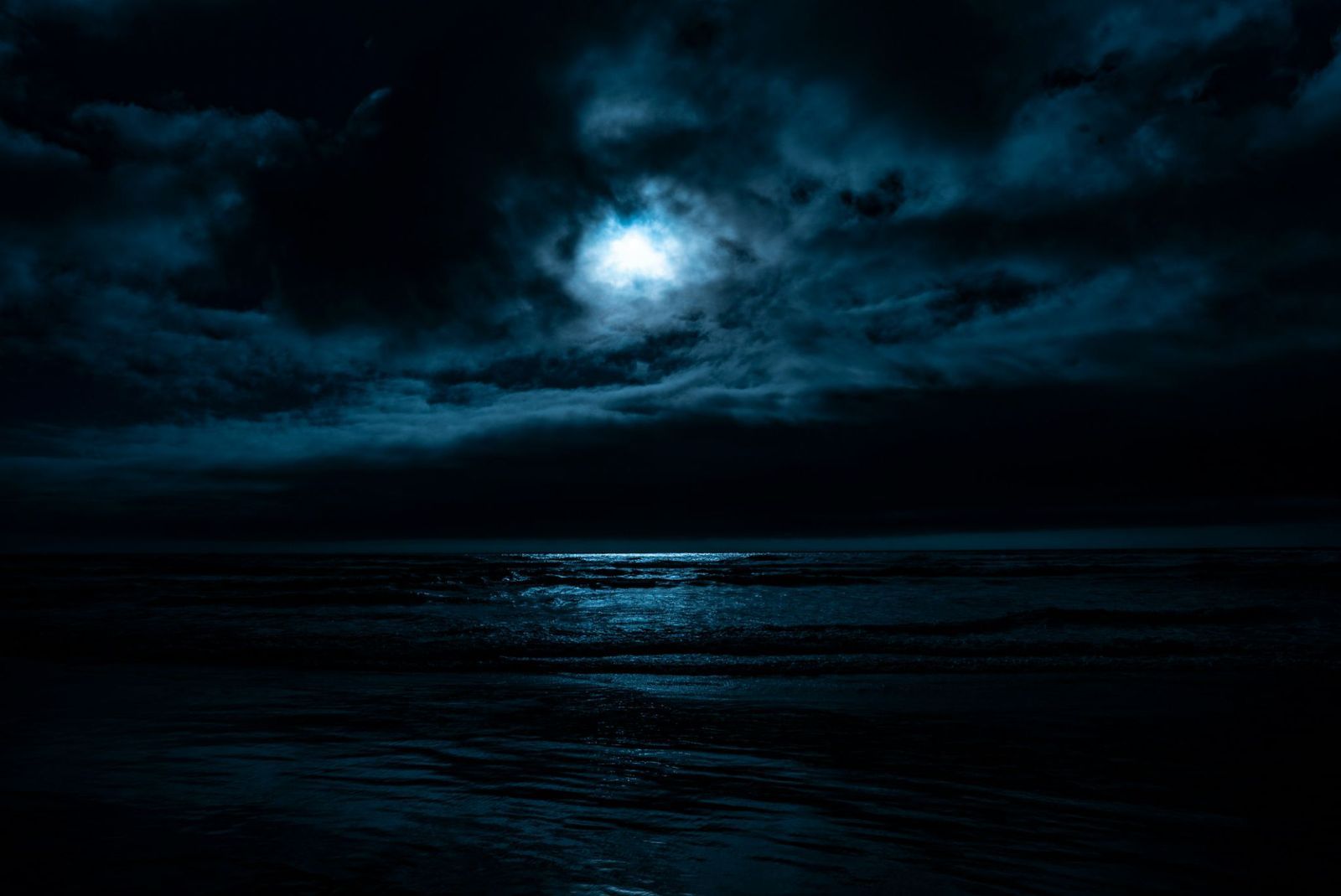
Have you ever tried to describe something but felt that no word, no matter how grandiose, did it justice? That is because some things are ineffable, or too great to be expressed. From the Latin ineffabilis ("unutterable" or "unspeakable"), this word has traditionally been used to refer to sacred things beyond human comprehension and too great to be contained in words.

2

Unutterable

Image: Rosie Sun

Meaning: Too deep, dark, or sacred to say out loud.

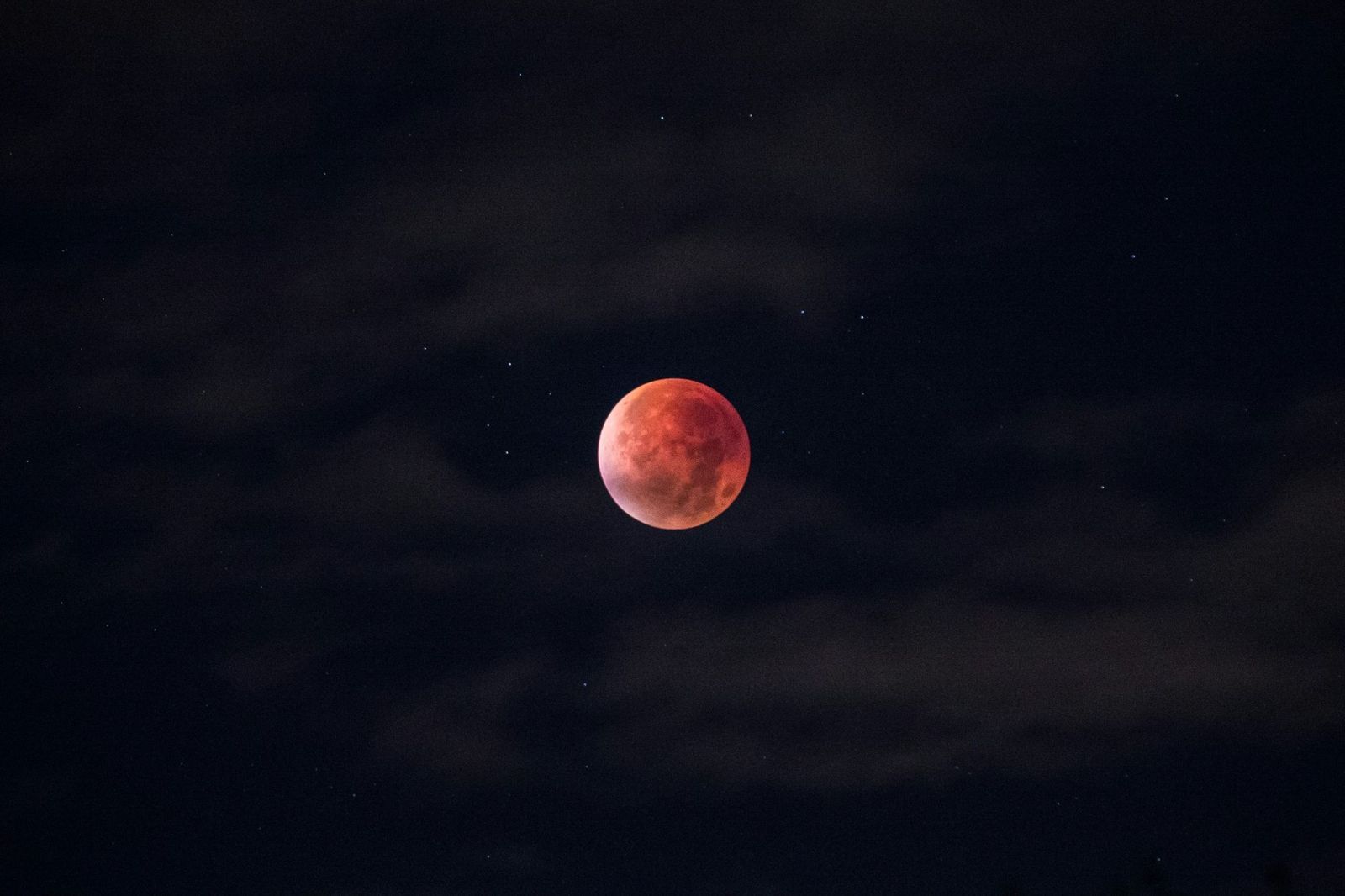
Some things feel bigger than words, but what about things that shouldn’t be put into words? The term unutterable describes those realities too deep, dark, or sacred to be spoken. In its root, "utterable" refers to the capacity of speaking about something. So, unutterable is not about lacking the right words, but about some realities being so intense that they shouldn’t be talked about.

3

Sublime

Image: Kyle Johnson

Meaning: An experience of such grand excellence or beauty that it paralyzes ordinary language.

Have you ever looked at something so magnificent that it made you feel fear? There is a word that condenses this experience. In the 18th century, philosophers started using the term sublime (From the Latin sublimis, "uplifted") to describe the limits of human imagination when confronted with the overwhelming power of nature. For them, this experience mixed the pleasure caused by the beauty of nature with the fear of feeling small and helpless against their power.

4

Qualia

Image: Pao Dayag

Meaning: The internal, highly subjective component of sense perceptions that cannot be fully shared.

Physical human experiences that are common to all are still subjective. What is it like being pricked by a thorn? What does chocolate taste like? These are describable experiences, but each piece of chocolate you eat has a unique, subjective quality that makes it different from other experiences of the same kind. This is called qualia, Latin for "of what sort" or "of what kind", and it was first used by 19th-century philosophers to discuss how we internally feel physical sensations.

5

Recondite

Image: Shyam

Meaning: little known, obscure, or hard for an average person to understand.

People with niche interests or specialized knowledge sometimes struggle to talk about it with those outside their circle. These people might be able to lightly discuss these topics, but they fail to grasp elements of them that are too hidden or little known. These things can be described as recondite, from the Latin reconditus ("hidden" or "concealed"), and they often sit at a deeper level of knowledge.

6

Inscrutable

Image: Anders Jildén

Meaning: Impossible to interpret or understand.

There are many things that we cannot understand, no matter how hard we try, but why describe them as "impossible to understand" when we have the word "inscrutable"? The opposite of the Latin scrutari ("to search" or "to examine"), inscrutable goes beyond not comprehending something, implying that, no matter the effort, we will never understand it.

7

Elusive

Image: Darius Bashar

Meaning: Hard to understand or define.

You might have used this word to describe things that are hard to catch, but have you ever used it related to something abstract, such as a concept, an idea, or a memory? From the Latin eludere, "to mock or escape by play", elusive ideas or concepts stay just out of reach, unable to be fully remembered or understood.

8

Nebulous

Image: NASA Hubble Space Telescope

Meaning: Unclear, vague, or having no fixed form.

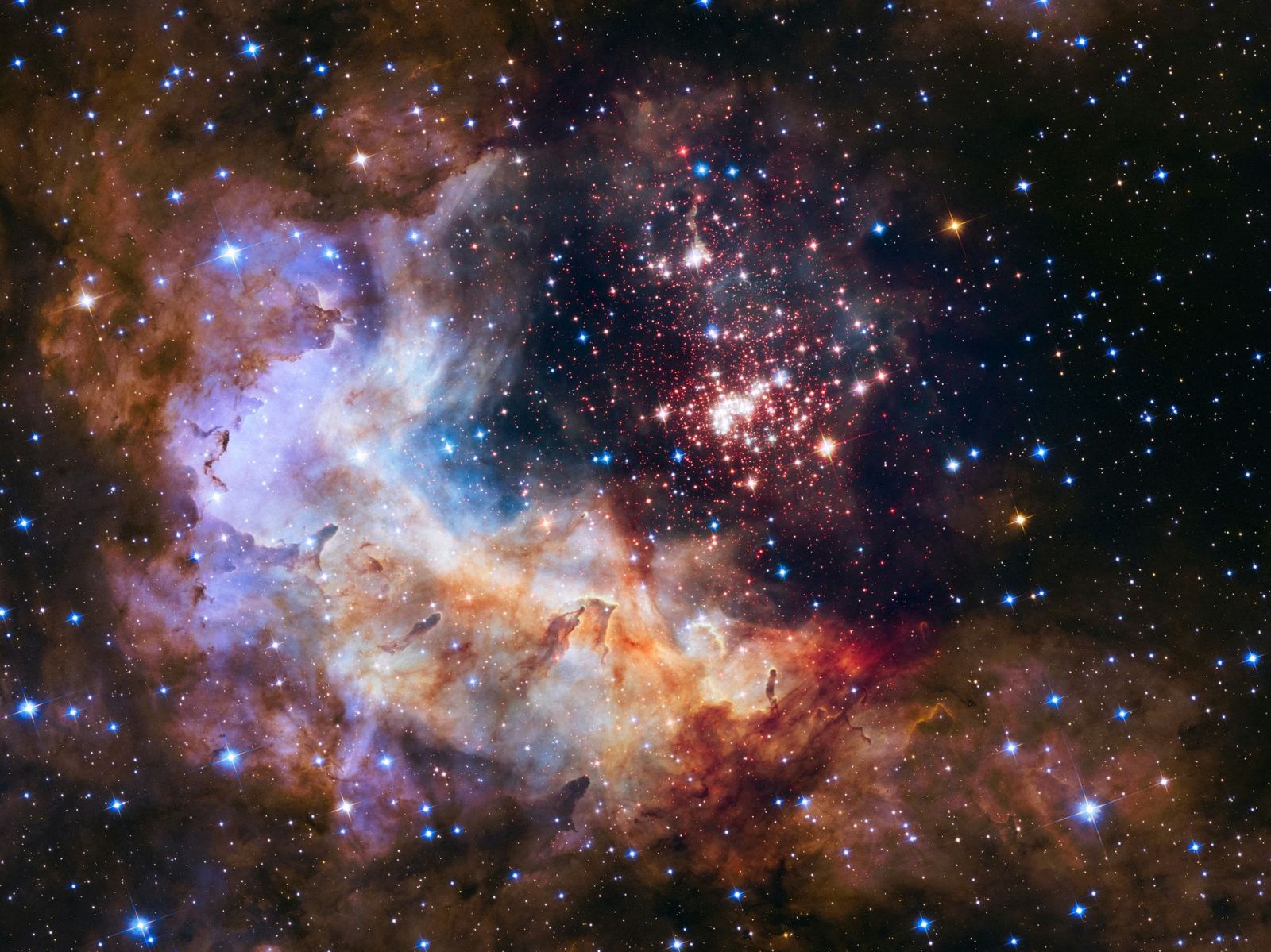
In space, a nebula is a cloud of dust, shapeless and hazy. What better word to describe unshaped, vague, or unclear things than nebulous? From the Latin nebulosus ("full of mist"), it was first used in English to describe cloudy weather, before shifting to a more abstract and figurative meaning.

9

Intangible

Image: Wolfgang Hasselmann

Meaning: something that cannot be touched, seen, or measured.

Nowadays, intangible is often used in relation to cultural practices or assets that are non-material and lack physicality, but its meaning is more complex. Although it has roots in the Latin tangere, meaning "to touch", and it literally means "untouchable", its figurative sense applies not to touch, but to the inability to grasp and define an idea or concept.

10

Inarticulate

Image: Nsey Benajah

Meaning: Unable to speak or express words, ideas, and feelings clearly.

Some people are at a loss for words because they don’t know how to describe their reality, but others are, quite literally, at a loss for words. From the Latin articulus ("joint"), it later derived into inarticulatus ("not jointed" or "not distinct"). Eventually, it acquired the figurative sense of mumbled, unclear speech, and of the inability to clearly express one’s feelings and thoughts, both things that would make one’s words "not distinct" or "separate".


What’s in a name?

The origin of 10 of New York City’s (many) nicknames


Published on November 28, 2026


Image: Yucel Moran

New York City has so many monikers that one of them could very well be The City of Nicknames. Throughout its history, the most populous city in the United States has received different names, some of which refer to its political and cultural significance, while others were coined in an ironic or satirical way. Because there is a life beyond The Big Apple, in this article, we will uncover the history behind 10 New York nicknames you probably didn't know about. Are you ready?

1

The Big Apple

Image: Pixabay

This is probably the most widespread nickname for New York. Although it became popular in the 1970s as an advertising campaign to attract tourists, it actually emerged as early as the 1920s. It was coined by a sportswriter named John Joseph Fitz Gerald, who at the time worked for the New York Morning Telegraph.

The expression The Big Apple in relation to New York City was used for the first time in an article on horse racing. As it was later revealed, Fitz Gerald picked it up from the way New Orleans stable hands referred to the city. "Big Apple" was what the jockeys called turf money prizes, and the biggest prize they could aspire to was, of course, in NYC.

2

The Empire City

Image: Hen Kaznelson

The nickname The Empire City refers to New York State's moniker. But in turn, it is said to derive from a statement by one of our Founding Fathers. Supposedly, George Washington once said about the city: "Surely this is the seat of the empire!".

The first written reference appeared in 1836 in an Illinois newspaper, which stated: New York City is "the Rome of America, the Empire City of the New World."

3

The Five Boroughs

Image: Marc Kargel

In 1898, New York City was consolidated into five counties or boroughs: Manhattan, Brooklyn, Queens, Staten Island, and later the Bronx. So, it is not surprising that at some point in history, the nickname The Five Boroughs began to be used to refer to the city, especially when alluding to the entire metropolitan area and not just Manhattan, the city center.

4

The City That Never Sleeps

Image: Jon Tyson

Today, no one would doubt that New York is a city that never sleeps: it has a lively cultural life, you'll always find a place open for a bite to eat, and you can even take the subway 24 hours a day, seven days a week. But what you may not know is that this has always been the essence of the city.

At least since the 1880s, people referred to New York City as The City That Never Sleeps for its evening mail delivery, electric lighting, and its mythical nightlife. Yet, it was Frank Sinatra who canonized the moniker in the lyrics of the song "New York, New York".

5

The Capital of the World

Image: Liliana Drew

What do ancient Rome and the most populous city in the United States have in common? At some point in their history, the two cities were dubbed The Capital of the World. In a 1948 essay, author E. B. White, best known for his children's books, borrowed the expression Caput Mundi from the Roman poet Lucan to refer to New York City.

Here is New York is an ode to one of the most iconic places in the world and, according to The New Yorker, is one of the best pieces ever written about the ever-changing city.

6

The Center of the Universe

Image: NASA

In the same grandiloquent vein as The Capital of the World, The Center of the Universe is a nickname coined by Robert F. Wagner Jr., mayor of New York City between 1954 and 1965.

Perhaps the moniker is a bit of an exaggeration, but we must admit that NYC is a cosmopolitan and influential city where culture flourishes, finance thrives, and where some of the most important events in history have taken place.

7

The City So Nice They Named It Twice

Image: Alex Vegas

Yes, as you can imagine, this nickname is inspired by the many songs about the city with the title "New York, New York", one of which was popularized by Frank Sinatra.

The City So Nice They Named It Twice was first used in the late 1950s by musician Jon Hendricks. However, it was late-night talk show host David Letterman who made a version of this nickname famous in 1984.

8

The Melting Pot

Image: Public domain, via Wikimedia Commons

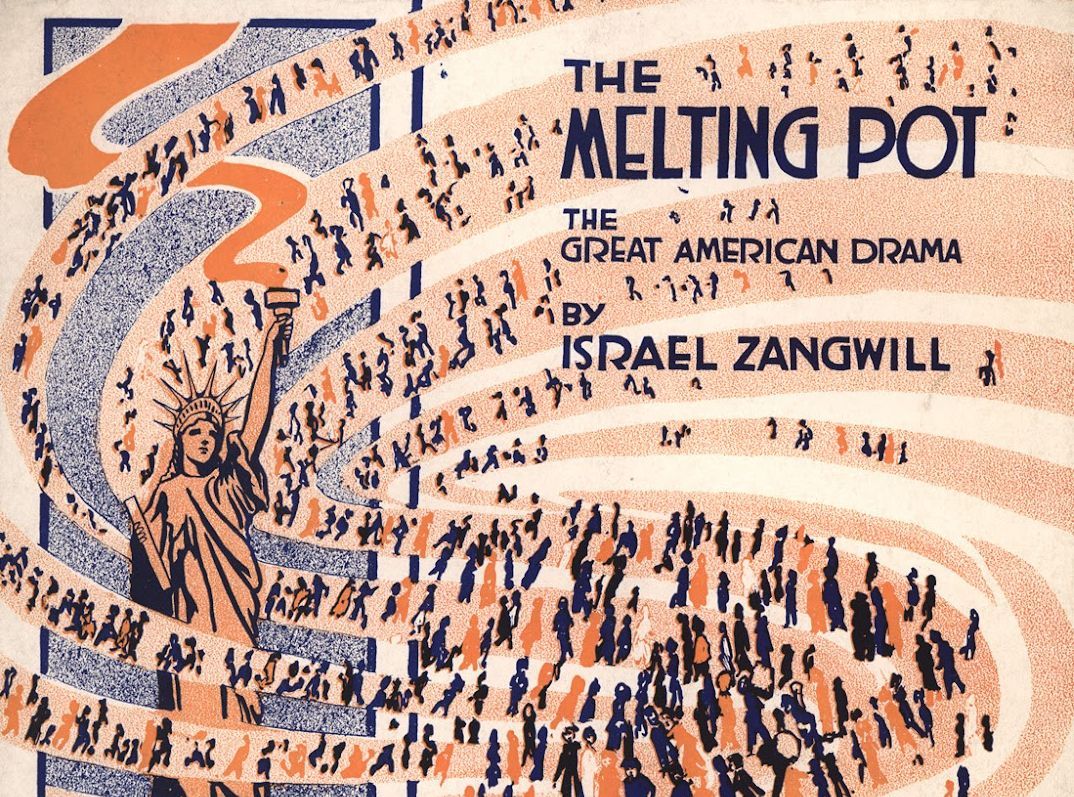
New York City is like a modern-day Tower of Babel. It is one of the most linguistically diverse places in the world, where all kinds of ethnicities and languages coexist —an estimated 700! Therefore, it is no coincidence that the city has been blessed with the nickname The Melting Pot, reflecting its great cultural diversity.

The term was used by several authors throughout history, including Henry James, but was ultimately popularized in 1908 by the play The Melting Pot by Israel Zangwill, which tells the story of a Jewish immigrant who escapes a Russian pogrom to rebuild his life in New York.

9

Gotham

Image: Naitian(Tony) Wang

You may think New York City got the nickname Gotham from the DC comic Batman. But in reality, it was the other way around. The first person to link Gotham to the city was the American short story writer Washington Irving in 1807. In turn, the author was inspired by a medieval English proverb about a village called Gotham, meaning "Goat's Town".

This tale tells the story of the town’s residents, who, to avoid the king's reprisals, pretended to be fools. Of course, Irving used this negative connotation of the term to satirize NYC. When Gotham began to be associated with the Dark Knight in the 1940s, the nickname came to invoke not New York's foolish aspects but its darker side.

10

Metropolis

Image: Jon Tyson

In stark contrast to Batman's dark Gotham, Jerry Siegel and Joe Shuster, authors of Superman, created their Metropolis in reference to the city's cheerier face, that is, New York in the daytime. The main location of the comic book was first called Metropolis in 1939. The rest is history!

Looking for an extra scoop of literary fun?

Learn more with our Word of the day

tenet

/ˈtɛnət/